




Filters
SORT
Product Availability –
Horse Power –
RPM –
Voltage –
Speeds –
Used With –
Enclosure Type –
Amperage –
Mount –
Rotation –
Motor Orientation –
Approvals –
Review Score –
 --%3E %3Csvg version='1.1' id='Fill' xmlns='http://www.w3.org/2000/svg' xmlns:xlink='http://www.w3.org/1999/xlink' x='0px' y='0px' viewBox='0 0 100 100' enable-background='new 0 0 100 100' xml:space='preserve'%3E %3Cpath fill='%23F15C02' d='M79.44,0.95H20.56C9.78,0.95,0.95,9.78,0.95,20.56v58.87c0,10.79,8.82,19.61,19.61,19.61h58.87 c10.79,0,19.61-8.83,19.61-19.61V20.56C99.05,9.78,90.22,0.95,79.44,0.95z M65.38,58.24l9.38,29.58L49.69,69.78L24.5,87.82 l9.34-29.6L8.8,39.6l30.73-0.17c0,0,6.98-19.61,10-28.93c0.54,1.36,9.88,29.1,9.88,29.1H91.2L65.38,58.24z'/%3E %3C/svg%3E)
 --%3E %3Csvg version='1.1' id='With-RB' xmlns='http://www.w3.org/2000/svg' xmlns:xlink='http://www.w3.org/1999/xlink' x='0px' y='0px' viewBox='0 0 100 100' enable-background='new 0 0 100 100' xml:space='preserve'%3E %3Cpath fill='%23FBC8B4' d='M79.44,0.95H20.56C9.78,0.95,0.95,9.78,0.95,20.56v58.87c0,10.79,8.82,19.61,19.61,19.61h58.87 c10.79,0,19.61-8.83,19.61-19.61V20.56C99.05,9.78,90.22,0.95,79.44,0.95z M65.38,58.24l9.38,29.58L49.69,69.78L24.5,87.82 l9.34-29.6L8.8,39.6l30.73-0.17c0,0,6.98-19.61,10-28.93c0.54,1.36,9.88,29.1,9.88,29.1H91.2L65.38,58.24z'/%3E %3C/svg%3E)
Price Range –
Evergreen Motors


 --%3E %3Csvg version='1.1' id='Half' xmlns='http://www.w3.org/2000/svg' xmlns:xlink='http://www.w3.org/1999/xlink' x='0px' y='0px' viewBox='0 0 100 100' enable-background='new 0 0 100 100' xml:space='preserve'%3E %3Cg%3E %3Cpath fill='%23F15C02' d='M30.05,70.23l3.79-12.01L8.8,39.6l30.73-0.17c0,0,6.98-19.61,10-28.93c0.54,1.36,9.88,29.1,9.88,29.1h1.58 L93.71,7.18c-3.58-3.82-8.66-6.23-14.28-6.23H20.56C9.78,0.95,0.95,9.78,0.95,20.56v58.87c0,5.41,2.22,10.32,5.79,13.88 L30.05,70.23z'/%3E %3C/g%3E %3Cpath fill='%23FBC8B4' d='M93.71,7.18L60.98,39.6H91.2L65.38,58.24l9.38,29.58L49.69,69.78L24.5,87.82l5.55-17.59L6.75,93.32 c3.55,3.54,8.44,5.73,13.82,5.73h58.87c10.79,0,19.61-8.83,19.61-19.61V20.56C99.05,15.4,97.01,10.69,93.71,7.18z'/%3E %3C/svg%3E)

 --%3E %3Csvg version='1.1' id='No-RB' xmlns='http://www.w3.org/2000/svg' xmlns:xlink='http://www.w3.org/1999/xlink' x='0px' y='0px' viewBox='0 0 100 100' enable-background='new 0 0 100 100' xml:space='preserve'%3E %3Cpath fill='%23CECECE' d='M79.44,0.95H20.56C9.78,0.95,0.95,9.78,0.95,20.56v58.87c0,10.79,8.82,19.61,19.61,19.61h58.87 c10.79,0,19.61-8.83,19.61-19.61V20.56C99.05,9.78,90.22,0.95,79.44,0.95z M65.38,58.24l9.38,29.58L49.69,69.78L24.5,87.82 l9.34-29.6L8.8,39.6l30.73-0.17c0,0,6.98-19.61,10-28.93c0.54,1.36,9.88,29.1,9.88,29.1H91.2L65.38,58.24z'/%3E %3C/svg%3E)
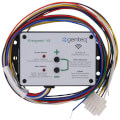
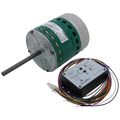
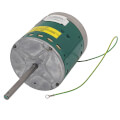
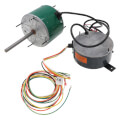
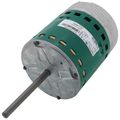
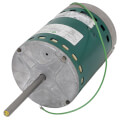

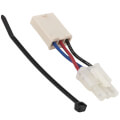
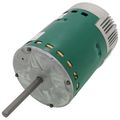
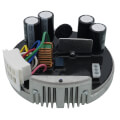
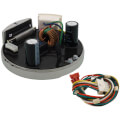

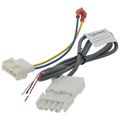
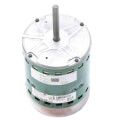
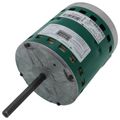
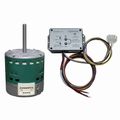
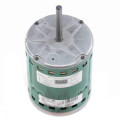
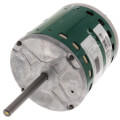
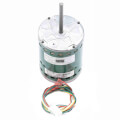
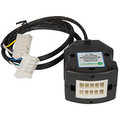
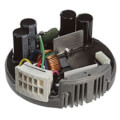

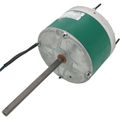
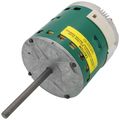
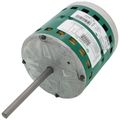
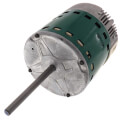
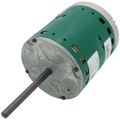
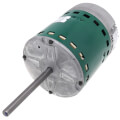
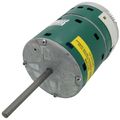
Evergreen motors are electronically commutated (ECM) replacement motors used to replace failed blower and condenser fan motors in residential and light commercial HVAC systems. Unlike a standard PSC motor, an ECM motor uses a built-in microprocessor to control speed, letting one Evergreen motor cover the electrical characteristics of several original equipment motors. Covering multiple original equipment variants with one motor reduces the number of exact-match parts a contractor needs to stock for common blower and fan motor failures. Evergreen motors cover indoor blower duty, outdoor condenser fan duty, and variable-speed applications depending on the specific motor selected. Because ECM motors run more efficiently than older PSC designs, swapping a failed PSC motor for an Evergreen ECM replacement can also lower the system's operating cost, though the wiring and control interface need to match the application. Confirming motor type, frame size, and horsepower before ordering keeps the replacement straightforward.
Subcategories
- Indoor Blower Motors: Indoor blower motors move conditioned air through the ductwork, and a failed blower motor is one of the most common reasons for a no-airflow service call. Evergreen blower motor replacements are designed to cover multiple original equipment motor variants with one part number, which cuts down on the number of exact-match motors a shop needs to stock. Confirming horsepower, frame size, and rotation before ordering keeps the swap straightforward. Blower motor replacements are typically one of the higher-volume parts on the shelf for any HVAC parts counter.
- Condenser Fan Motors: Condenser fan motors pull outdoor air across the condenser coil, and constant outdoor exposure makes them prone to bearing wear and moisture-related failures over time. An Evergreen condenser fan replacement covers the outdoor duty cycle these motors see, including higher ambient operating temperatures. Fan blade compatibility and rotation direction both need confirmation before ordering a replacement. Outdoor motors typically fail more often than their indoor counterparts because of constant weather exposure.
- Variable-Speed ECM Replacements: Variable-speed ECM motors adjust airflow output based on a control signal, rather than running at a single fixed speed like a standard PSC motor. Evergreen variable-speed replacements are built to cover multiple original variable-speed motor models with fewer stocked part numbers. Getting the control wiring and programming interface right matters more on a variable-speed swap than on a simple single-speed replacement. Contractors comfortable with ECM programming tend to prefer standardizing on one replacement line across their service trucks.
Buying Guide
Start any Evergreen Motors selection by confirming what's failing: an indoor blower motor, an outdoor condenser fan motor, or a variable-speed unit, since each category covers a different duty cycle and wiring setup. Pulling the original motor's nameplate data, horsepower, voltage, RPM, and frame size, is the fastest way to narrow down the right replacement.
For single-speed PSC motor replacements, matching horsepower and frame size usually gets the job most of the way there, since Evergreen motors are designed to cover several original equipment variants with one part number. Variable-speed replacements need more attention to the control interface and wiring configuration, since a mismatch there can leave the new motor running at the wrong speed or not communicating with the board at all.
Stocking strategy matters too. Because Evergreen Motors consolidate coverage across multiple original equipment part numbers, a shop can often carry fewer total motors on the truck while still covering more failure calls. Fewer motors to stock is a meaningful advantage for service techs juggling limited van space. Before finalizing an order, double check rotation direction and shaft length against the application, since a motor that's electrically correct but mechanically mismatched still won't complete the repair.
Frequently Asked Questions
What's the difference between an Evergreen motor and the original equipment motor?
Evergreen motors are ECM replacement motors designed to cover the electrical specs of several original equipment motors with one part number. Stocking one Evergreen motor can cover failures that used to require multiple exact-match parts, cutting down on shelf space needed for exact matches.
Can an Evergreen motor replace a condenser fan motor?
Yes, Evergreen offers condenser fan motor replacements built for outdoor duty cycles, including the higher ambient temperatures and weather exposure condenser fans see. Confirming fan blade compatibility and rotation direction before ordering keeps the swap straightforward.
Do variable-speed Evergreen motors need special programming?
Yes, variable-speed replacements need the control wiring and programming interface matched to the original system, unlike a simple single-speed swap. Getting that wrong can leave the new motor running at the wrong speed or failing to communicate with the control board.
How do I know what horsepower motor I need?
Pull the horsepower, voltage, RPM, and frame size directly from the original motor's nameplate before ordering a replacement. Matching those specs is the fastest way to confirm compatibility with an Evergreen replacement motor.
Why do condenser fan motors fail more often than blower motors?
Condenser fan motors sit outdoors full time, which exposes them to more moisture and temperature swings than an indoor blower motor sees. Constant outdoor exposure speeds up bearing wear and is a common reason condenser fan motors fail before their indoor counterparts.
