




Filters
SORT
Product Availability –
Brand –
Product Type –
Size –
Connection Type –
Review Score –
 --%3E %3Csvg version='1.1' id='Fill' xmlns='http://www.w3.org/2000/svg' xmlns:xlink='http://www.w3.org/1999/xlink' x='0px' y='0px' viewBox='0 0 100 100' enable-background='new 0 0 100 100' xml:space='preserve'%3E %3Cpath fill='%23F15C02' d='M79.44,0.95H20.56C9.78,0.95,0.95,9.78,0.95,20.56v58.87c0,10.79,8.82,19.61,19.61,19.61h58.87 c10.79,0,19.61-8.83,19.61-19.61V20.56C99.05,9.78,90.22,0.95,79.44,0.95z M65.38,58.24l9.38,29.58L49.69,69.78L24.5,87.82 l9.34-29.6L8.8,39.6l30.73-0.17c0,0,6.98-19.61,10-28.93c0.54,1.36,9.88,29.1,9.88,29.1H91.2L65.38,58.24z'/%3E %3C/svg%3E)
 --%3E %3Csvg version='1.1' id='With-RB' xmlns='http://www.w3.org/2000/svg' xmlns:xlink='http://www.w3.org/1999/xlink' x='0px' y='0px' viewBox='0 0 100 100' enable-background='new 0 0 100 100' xml:space='preserve'%3E %3Cpath fill='%23FBC8B4' d='M79.44,0.95H20.56C9.78,0.95,0.95,9.78,0.95,20.56v58.87c0,10.79,8.82,19.61,19.61,19.61h58.87 c10.79,0,19.61-8.83,19.61-19.61V20.56C99.05,9.78,90.22,0.95,79.44,0.95z M65.38,58.24l9.38,29.58L49.69,69.78L24.5,87.82 l9.34-29.6L8.8,39.6l30.73-0.17c0,0,6.98-19.61,10-28.93c0.54,1.36,9.88,29.1,9.88,29.1H91.2L65.38,58.24z'/%3E %3C/svg%3E)
Price Range –
PE Gas Pipe Transition Fittings








 --%3E %3Csvg version='1.1' id='Half' xmlns='http://www.w3.org/2000/svg' xmlns:xlink='http://www.w3.org/1999/xlink' x='0px' y='0px' viewBox='0 0 100 100' enable-background='new 0 0 100 100' xml:space='preserve'%3E %3Cg%3E %3Cpath fill='%23F15C02' d='M30.05,70.23l3.79-12.01L8.8,39.6l30.73-0.17c0,0,6.98-19.61,10-28.93c0.54,1.36,9.88,29.1,9.88,29.1h1.58 L93.71,7.18c-3.58-3.82-8.66-6.23-14.28-6.23H20.56C9.78,0.95,0.95,9.78,0.95,20.56v58.87c0,5.41,2.22,10.32,5.79,13.88 L30.05,70.23z'/%3E %3C/g%3E %3Cpath fill='%23FBC8B4' d='M93.71,7.18L60.98,39.6H91.2L65.38,58.24l9.38,29.58L49.69,69.78L24.5,87.82l5.55-17.59L6.75,93.32 c3.55,3.54,8.44,5.73,13.82,5.73h58.87c10.79,0,19.61-8.83,19.61-19.61V20.56C99.05,15.4,97.01,10.69,93.71,7.18z'/%3E %3C/svg%3E)





 --%3E %3Csvg version='1.1' id='No-RB' xmlns='http://www.w3.org/2000/svg' xmlns:xlink='http://www.w3.org/1999/xlink' x='0px' y='0px' viewBox='0 0 100 100' enable-background='new 0 0 100 100' xml:space='preserve'%3E %3Cpath fill='%23CECECE' d='M79.44,0.95H20.56C9.78,0.95,0.95,9.78,0.95,20.56v58.87c0,10.79,8.82,19.61,19.61,19.61h58.87 c10.79,0,19.61-8.83,19.61-19.61V20.56C99.05,9.78,90.22,0.95,79.44,0.95z M65.38,58.24l9.38,29.58L49.69,69.78L24.5,87.82 l9.34-29.6L8.8,39.6l30.73-0.17c0,0,6.98-19.61,10-28.93c0.54,1.36,9.88,29.1,9.88,29.1H91.2L65.38,58.24z'/%3E %3C/svg%3E)


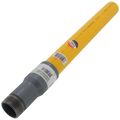




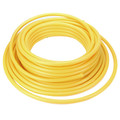


PE gas pipe transition fittings are components that connect polyethylene gas pipe to a different pipe material, most often steel or copper, at the point where a gas line changes from plastic to metal. Installers use them at meter sets, risers, and service entrances where code requires a transition from underground PE pipe to above-ground metallic pipe. A properly rated transition fitting maintains a gas-tight seal across the material change and is designed to resist the mechanical stress of that junction. Because these fittings sit at a critical point in a gas distribution system, installers verify the pressure rating and pipe size match the application before backfilling or finishing the connection. Choosing the right fitting style, whether a mechanical coupling or a factory-fused transition, depends on the pipe sizes involved and the specific code requirements for the job.
Subcategories
- Steel-to-PE Risers: Risers bring underground PE pipe up out of the ground and transition it to steel pipe at the point where it becomes exposed to the elements. Anodeless riser designs bond the PE and steel sections at the factory, which keeps the transition joint out of the field. Correct riser height and support keep the assembly from bending or stressing the buried pipe below it. Riser fittings typically show up at meter sets and building entrances.
- Mechanical Transition Couplings: Mechanical couplings join PE pipe to steel or copper pipe using compression fittings rather than heat fusion. Field crews use them where a factory-fused transition isn't practical or where a repair needs to be made without specialized fusion equipment. Proper torque on the compression nuts is what keeps the joint gas-tight. Mechanical couplings are a common choice for repair work on existing gas services.
- Electrofusion Transition Fittings: Electrofusion fittings use an internal heating element to fuse PE pipe to a matching PE-lined transition piece, creating a permanent, code-compliant joint. Installers rely on a fusion control box to apply the correct heat and time cycle for the fitting size. Surface preparation, including scraping the pipe's oxidized layer, directly affects joint quality. Electrofusion is common on larger-diameter gas mains and municipal-scale work.
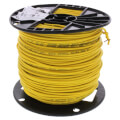
- Transition Fitting Accessories: Tracer wire connectors, tapping tees, and end caps round out the parts needed to complete a PE-to-metal transition on a gas line. Tracer wire keeps buried PE pipe locatable later, since the pipe itself doesn't show up on a metal detector. Tapping tees allow a new service line to branch off an existing main without cutting into it directly. Keeping these accessories on hand alongside the transition fitting itself avoids a second trip for a small part.
Buying Guide
Confirm the pipe sizes on both sides of the transition first, since a fitting rated for one diameter combination won't necessarily work for another without an added reducer. Matching the fitting to the exact PE pipe dimension ratio and the connecting metal pipe's outside diameter is the starting point for any order.
Pressure rating comes next. Gas distribution systems operate at a range of pressures depending on whether the line is a service, a distribution main, or a higher-pressure transmission line, and the transition fitting has to be rated for the system's maximum operating pressure, not just the pipe's rating.
Installation method should match the crew's available equipment and the application. Electrofusion requires a fusion control box and trained operators, while mechanical couplings can be installed with hand tools, which makes them a practical option for smaller repair jobs or crews without fusion equipment on site.
PE gas pipe transition fittings used on active gas services should carry the appropriate agency listing for gas applications, since fittings rated only for water or other non-gas uses aren't a substitute. Local gas utility and code requirements often specify which transition methods are approved for a given jurisdiction, so checking those requirements before ordering avoids a rejected inspection.
Frequently Asked Questions
What is a PE-to-steel transition fitting used for?
It connects underground polyethylene gas pipe to steel or copper pipe at points where the line needs to be exposed above ground, such as a meter set or building entrance. The fitting maintains a gas-tight seal across the change in pipe material.
Can a transition fitting be installed without fusion equipment?
Mechanical compression-style transition couplings can be installed with hand tools, making them a practical option for repair work or smaller jobs where fusion equipment isn't available. Larger new installations more often use electrofusion or factory-made anodeless risers instead.
What does anodeless mean on a riser fitting?
An anodeless riser has the PE-to-steel transition built into the fitting at the factory, so field crews don't need to create that joint on site. Older riser designs required a separate anode for corrosion protection at a field-made joint, which anodeless designs eliminate.
How is pipe size matched between PE and metal sections?
PE pipe is sized by its outside diameter and dimension ratio, while steel pipe is typically sized by nominal pipe size, so the transition fitting has to reconcile the two. Manufacturer sizing charts show which PE dimension pairs correctly with which metal pipe size for a given fitting.
Does tracer wire need to be installed with a PE transition fitting?
Local code typically requires tracer wire on any buried PE gas line, and the transition point is where that wire needs to be properly terminated and connected to the above-ground metal piping. Skipping this step makes the buried line harder to locate later for maintenance or excavation work.
