




Filters
SORT
Product Availability –
Brand –
Amperage –
Number Of Circuits –
Spaces –
Installation Type –
Mount –
Voltage –
Current (amps) –
Review Score –
 --%3E %3Csvg version='1.1' id='Fill' xmlns='http://www.w3.org/2000/svg' xmlns:xlink='http://www.w3.org/1999/xlink' x='0px' y='0px' viewBox='0 0 100 100' enable-background='new 0 0 100 100' xml:space='preserve'%3E %3Cpath fill='%23F15C02' d='M79.44,0.95H20.56C9.78,0.95,0.95,9.78,0.95,20.56v58.87c0,10.79,8.82,19.61,19.61,19.61h58.87 c10.79,0,19.61-8.83,19.61-19.61V20.56C99.05,9.78,90.22,0.95,79.44,0.95z M65.38,58.24l9.38,29.58L49.69,69.78L24.5,87.82 l9.34-29.6L8.8,39.6l30.73-0.17c0,0,6.98-19.61,10-28.93c0.54,1.36,9.88,29.1,9.88,29.1H91.2L65.38,58.24z'/%3E %3C/svg%3E)
 --%3E %3Csvg version='1.1' id='With-RB' xmlns='http://www.w3.org/2000/svg' xmlns:xlink='http://www.w3.org/1999/xlink' x='0px' y='0px' viewBox='0 0 100 100' enable-background='new 0 0 100 100' xml:space='preserve'%3E %3Cpath fill='%23FBC8B4' d='M79.44,0.95H20.56C9.78,0.95,0.95,9.78,0.95,20.56v58.87c0,10.79,8.82,19.61,19.61,19.61h58.87 c10.79,0,19.61-8.83,19.61-19.61V20.56C99.05,9.78,90.22,0.95,79.44,0.95z M65.38,58.24l9.38,29.58L49.69,69.78L24.5,87.82 l9.34-29.6L8.8,39.6l30.73-0.17c0,0,6.98-19.61,10-28.93c0.54,1.36,9.88,29.1,9.88,29.1H91.2L65.38,58.24z'/%3E %3C/svg%3E)
Price Range –
Electrical Panel Boxes


 --%3E %3Csvg version='1.1' id='No-RB' xmlns='http://www.w3.org/2000/svg' xmlns:xlink='http://www.w3.org/1999/xlink' x='0px' y='0px' viewBox='0 0 100 100' enable-background='new 0 0 100 100' xml:space='preserve'%3E %3Cpath fill='%23CECECE' d='M79.44,0.95H20.56C9.78,0.95,0.95,9.78,0.95,20.56v58.87c0,10.79,8.82,19.61,19.61,19.61h58.87 c10.79,0,19.61-8.83,19.61-19.61V20.56C99.05,9.78,90.22,0.95,79.44,0.95z M65.38,58.24l9.38,29.58L49.69,69.78L24.5,87.82 l9.34-29.6L8.8,39.6l30.73-0.17c0,0,6.98-19.61,10-28.93c0.54,1.36,9.88,29.1,9.88,29.1H91.2L65.38,58.24z'/%3E %3C/svg%3E)




 --%3E %3Csvg version='1.1' id='Half' xmlns='http://www.w3.org/2000/svg' xmlns:xlink='http://www.w3.org/1999/xlink' x='0px' y='0px' viewBox='0 0 100 100' enable-background='new 0 0 100 100' xml:space='preserve'%3E %3Cg%3E %3Cpath fill='%23F15C02' d='M30.05,70.23l3.79-12.01L8.8,39.6l30.73-0.17c0,0,6.98-19.61,10-28.93c0.54,1.36,9.88,29.1,9.88,29.1h1.58 L93.71,7.18c-3.58-3.82-8.66-6.23-14.28-6.23H20.56C9.78,0.95,0.95,9.78,0.95,20.56v58.87c0,5.41,2.22,10.32,5.79,13.88 L30.05,70.23z'/%3E %3C/g%3E %3Cpath fill='%23FBC8B4' d='M93.71,7.18L60.98,39.6H91.2L65.38,58.24l9.38,29.58L49.69,69.78L24.5,87.82l5.55-17.59L6.75,93.32 c3.55,3.54,8.44,5.73,13.82,5.73h58.87c10.79,0,19.61-8.83,19.61-19.61V20.56C99.05,15.4,97.01,10.69,93.71,7.18z'/%3E %3C/svg%3E)


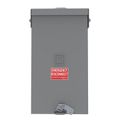
Electrical panel boxes house the circuit breakers or fuses that distribute power throughout a building, serving as the central point where incoming utility power splits into the individual circuits feeding outlets, lighting, and equipment. Each box is rated for a specific number of circuit spaces and a maximum amperage, so matching the box to the building's electrical load and the number of circuits needed is central to a code compliant installation. Electricians install new panel boxes when replacing outdated equipment, expanding a building's electrical capacity, or setting up service for new construction or renovation. Because a panel box sits at the center of a building's entire electrical distribution, choosing the correct amperage rating, circuit count, and enclosure type for the installation environment affects both the safety and the future expandability of the system it serves.
Subcategories
- Main Breaker Panels: Main breaker panels include a built in main disconnect breaker that can shut off power to the entire panel from a single switch, which many jurisdictions require for a service entrance panel. Electricians typically install these as the primary panel where utility power first enters a building's electrical system. Sizing the main breaker to match the service entrance conductors and the utility's rated capacity is necessary for a code compliant installation. Because the main disconnect lives inside the panel itself, no separate disconnect switch is needed elsewhere in the system.
- Main Lug Panels: Main lug panels connect incoming power directly to the bus bar without a built in main disconnect breaker, relying on an upstream breaker or disconnect elsewhere in the system to shut off power. These see use as sub panels fed from a main breaker panel, or in service configurations where the disconnect is required to be located separately from the panel. Confirming local code allows a main lug configuration for the specific application, since disconnect location requirements vary, is worth checking before installation. Matching the lug's wire gauge rating to the feeder conductors keeps the connection within its rated capacity.
- Sub Panels: Sub panels distribute power to a specific area of a building, such as a detached garage, finished basement, or an addition, and are fed from a main panel elsewhere in the electrical system. Electricians add these when an area needs more circuits than the existing panel has room for, or when running individual circuits back to the main panel isn't practical because of distance. Sizing the feeder breaker at the main panel and the sub panel's own rating to match the actual load served keeps the installation within code. A sub panel located outdoors or in a detached structure typically needs a rated enclosure suited to that environment.
- Panel Box Accessories & Covers: Panel accessories cover the smaller components that complete a panel installation, including blank filler plates for unused breaker spaces, circuit directory labels, and replacement covers or doors for existing panels. Electricians replace a damaged or missing cover promptly, since an open panel front is both a safety hazard and typically a code violation. Filler plates for unused spaces keep the panel enclosure properly rated against dust and incidental contact. Keeping a panel's circuit directory current, rather than relying on outdated labels, saves time for the next electrician working on the same panel.
Buying Guide
Choosing the right electrical panel box starts with calculating the building's actual electrical load, including existing circuits and any anticipated future additions, since undersizing a panel now often means a costly upgrade later when capacity runs out. A main breaker panel is the right choice where a built in disconnect is required or preferred at the service entrance, while a main lug panel suits sub panel applications or configurations where the disconnect is located elsewhere in the system, provided local code permits that arrangement. Sub panels extending power to a detached structure, addition, or area with additional circuit needs should be sized to the load they'll actually serve, with the feeder breaker at the main panel matched to the sub panel's rating. Enclosure type matters as much as electrical rating: an indoor panel in a dry, conditioned space has different requirements than one installed outdoors or in a damp basement, and choosing the correct enclosure rating for the installation environment is a code requirement, not just a durability preference. Circuit count deserves attention beyond the immediate need, since a panel with a few spare spaces costs little more than one filled to capacity and avoids a full panel swap the next time a circuit needs to be added. Confirming compatibility between the panel and the breakers already on hand, or planned for use, rounds out the specification before ordering.
Frequently Asked Questions
What's the difference between a main breaker panel and a main lug panel?
A main breaker panel includes a built in disconnect breaker that shuts off the entire panel, while a main lug panel connects directly to the bus bar and relies on a disconnect located elsewhere in the system, typically at an upstream main panel.
How is the correct amperage rating determined for a new panel?
Calculating the building's actual electrical load, including existing circuits and any anticipated future additions, determines the appropriate amperage rating, and sizing with some spare capacity avoids a costly full panel upgrade later.
When is a sub panel needed instead of running new circuits to the main panel?
A sub panel makes sense when an area needs more circuits than the main panel has room for, or when the distance to the main panel makes running individual circuits impractical.
Does the installation environment affect which panel enclosure is needed?
Yes. An indoor panel in a dry, conditioned space has different enclosure requirements than one installed outdoors or in a damp basement, and matching enclosure rating to the environment is a code requirement.
Why replace a damaged panel cover promptly?
An open or damaged panel front leaves live components exposed, which is both a safety hazard and typically a code violation, so replacing it promptly is standard practice.
