




Filters
SORT
Product Availability –
Brand –
Voltage –
Amperage –
Review Score –
 --%3E %3Csvg version='1.1' id='Fill' xmlns='http://www.w3.org/2000/svg' xmlns:xlink='http://www.w3.org/1999/xlink' x='0px' y='0px' viewBox='0 0 100 100' enable-background='new 0 0 100 100' xml:space='preserve'%3E %3Cpath fill='%23F15C02' d='M79.44,0.95H20.56C9.78,0.95,0.95,9.78,0.95,20.56v58.87c0,10.79,8.82,19.61,19.61,19.61h58.87 c10.79,0,19.61-8.83,19.61-19.61V20.56C99.05,9.78,90.22,0.95,79.44,0.95z M65.38,58.24l9.38,29.58L49.69,69.78L24.5,87.82 l9.34-29.6L8.8,39.6l30.73-0.17c0,0,6.98-19.61,10-28.93c0.54,1.36,9.88,29.1,9.88,29.1H91.2L65.38,58.24z'/%3E %3C/svg%3E)
 --%3E %3Csvg version='1.1' id='With-RB' xmlns='http://www.w3.org/2000/svg' xmlns:xlink='http://www.w3.org/1999/xlink' x='0px' y='0px' viewBox='0 0 100 100' enable-background='new 0 0 100 100' xml:space='preserve'%3E %3Cpath fill='%23FBC8B4' d='M79.44,0.95H20.56C9.78,0.95,0.95,9.78,0.95,20.56v58.87c0,10.79,8.82,19.61,19.61,19.61h58.87 c10.79,0,19.61-8.83,19.61-19.61V20.56C99.05,9.78,90.22,0.95,79.44,0.95z M65.38,58.24l9.38,29.58L49.69,69.78L24.5,87.82 l9.34-29.6L8.8,39.6l30.73-0.17c0,0,6.98-19.61,10-28.93c0.54,1.36,9.88,29.1,9.88,29.1H91.2L65.38,58.24z'/%3E %3C/svg%3E)
Price Range –
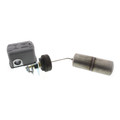
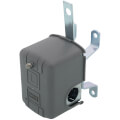
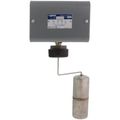
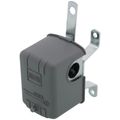
Pump Float Switches






 --%3E %3Csvg version='1.1' id='Half' xmlns='http://www.w3.org/2000/svg' xmlns:xlink='http://www.w3.org/1999/xlink' x='0px' y='0px' viewBox='0 0 100 100' enable-background='new 0 0 100 100' xml:space='preserve'%3E %3Cg%3E %3Cpath fill='%23F15C02' d='M30.05,70.23l3.79-12.01L8.8,39.6l30.73-0.17c0,0,6.98-19.61,10-28.93c0.54,1.36,9.88,29.1,9.88,29.1h1.58 L93.71,7.18c-3.58-3.82-8.66-6.23-14.28-6.23H20.56C9.78,0.95,0.95,9.78,0.95,20.56v58.87c0,5.41,2.22,10.32,5.79,13.88 L30.05,70.23z'/%3E %3C/g%3E %3Cpath fill='%23FBC8B4' d='M93.71,7.18L60.98,39.6H91.2L65.38,58.24l9.38,29.58L49.69,69.78L24.5,87.82l5.55-17.59L6.75,93.32 c3.55,3.54,8.44,5.73,13.82,5.73h58.87c10.79,0,19.61-8.83,19.61-19.61V20.56C99.05,15.4,97.01,10.69,93.71,7.18z'/%3E %3C/svg%3E)

 --%3E %3Csvg version='1.1' id='No-RB' xmlns='http://www.w3.org/2000/svg' xmlns:xlink='http://www.w3.org/1999/xlink' x='0px' y='0px' viewBox='0 0 100 100' enable-background='new 0 0 100 100' xml:space='preserve'%3E %3Cpath fill='%23CECECE' d='M79.44,0.95H20.56C9.78,0.95,0.95,9.78,0.95,20.56v58.87c0,10.79,8.82,19.61,19.61,19.61h58.87 c10.79,0,19.61-8.83,19.61-19.61V20.56C99.05,9.78,90.22,0.95,79.44,0.95z M65.38,58.24l9.38,29.58L49.69,69.78L24.5,87.82 l9.34-29.6L8.8,39.6l30.73-0.17c0,0,6.98-19.61,10-28.93c0.54,1.36,9.88,29.1,9.88,29.1H91.2L65.38,58.24z'/%3E %3C/svg%3E)


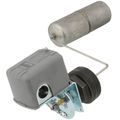


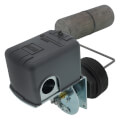
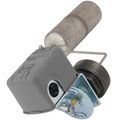


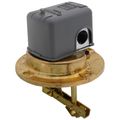
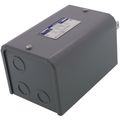
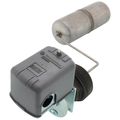


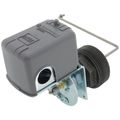


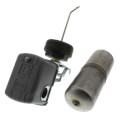
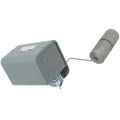
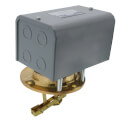
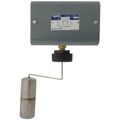

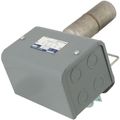
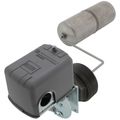

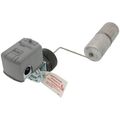


Pump float switches are the control component that turns a sump, sewage, or effluent pump on and off based on liquid level, removing the need for a technician or homeowner to manually flip a switch every time water rises in a basin. A float switch rides on the surface of the water or pivots on a mounted rod, and once the liquid reaches a preset trip point, it closes or opens a circuit that energizes the pump. Most residential and light-commercial models are rated for float switches operating on 120V or 230V circuits and are built with a sealed, corrosion-resistant housing so they can sit in a wet basin indefinitely without shorting out.
Getting the right float switch matters because a mismatched or failing one is one of the most common reasons a pump doesn't run when it's needed. Contractors specify switches based on basin size, mounting style, and how the switch will pair with the pump, since some pumps use a piggyback plug-style switch while others rely on a separate switch wired directly into a control panel.
Subcategories
- Tethered Float Switches: Tethered switches hang from a cord clipped to the pump or discharge pipe and swing freely as the water level changes. Installers use them in basins where there's enough clearance for the float to travel without hitting the basin wall or other equipment. The trip point can be adjusted by shortening or lengthening the tether, which makes them a flexible choice for retrofits.
- Vertical (Rod) Float Switches: Vertical switches mount on a rigid rod or bracket and move up and down in a straight line instead of swinging. Plumbers favor this style for narrow basins or tank installations where a tethered float doesn't have room to swing freely. Because the travel distance is fixed by the rod length, the on/off differential is easy to set and repeat.
- Piggyback Float Switches: A piggyback switch plugs into the wall outlet, and the pump plugs into the back of the switch, so the pump only receives power when the float calls for it. This style is common on portable and small submersible sump pumps because it requires no separate wiring. Contractors use it for straightforward single-pump setups rather than systems with a control panel.
- Wide-Angle Float Switches: Wide-angle switches use a weighted, pivoting design that tolerates more side-to-side motion in turbulent or narrow basins without false-triggering. They're a common upgrade in sewage and effluent applications where solids and turbulence can interfere with a standard tethered float. The wider trip angle also helps the switch resist getting stuck against a basin wall.
Buying Guide
Start with how the switch will connect to the pump: some sump pumps expect a piggyback plug switch, while sewage and effluent pumps in a duplex or control-panel setup need a standalone switch with bare lead wires. Mixing these up is a common installation mistake, so confirm which style the specific pump model calls for before ordering.
Basin size and shape drive the mounting style. A wide, deep basin gives a tethered float room to swing, while a narrow tank or one crowded with multiple pumps and switches usually calls for a vertical rod-mounted switch instead. Wide-angle switches are worth the upgrade in sewage basins where solids and turbulence tend to hang up a standard tethered float.
Voltage and amperage ratings need to match the pump and circuit. Most residential switches are rated for 120V, but some commercial and larger sewage ejector setups run on 230V, so check the switch's rating against the pump nameplate and the panel it will tie into.
Cord length and cable jacket matter more than it seems. A switch cord that's too short forces an awkward mounting position, and in corrosive or high-humidity basins, a jacket rated for continuous submersion holds up far longer than a general-purpose cord.
Whenever possible, use a float switch designed or approved for the pump brand it will control, since manufacturers test their pumps against specific switch trip points and amperage draws. Pairing mismatched components can lead to short-cycling or a switch that fails to trip the pump at all.
Frequently Asked Questions
How do I know if a float switch is bad?
A pump that runs continuously, never turns on, or short-cycles rapidly often points to a failed switch. Testing the switch by manually raising and lowering the float while listening for the pump to engage is the quickest way to confirm it before replacing anything else.
Can I use a tethered float switch in a narrow basin?
It depends on the clearance. If the float can't swing freely without hitting the basin wall or another pump, it may false-trigger or get stuck. A vertical rod-mounted switch is usually the better fit for tight spaces.
Do float switches work with both 120V and 230V pumps?
Not interchangeably. Each switch is rated for a specific voltage and amperage range, so it has to match the pump and circuit it's controlling. Check the switch's nameplate rating against the pump before installing.
What's the difference between a piggyback switch and a standalone switch?
A piggyback switch plugs directly between the outlet and the pump cord, giving the pump power only when the float calls for it. A standalone switch has bare lead wires meant to be wired into a control panel, which is typical in duplex sewage or effluent systems.
How often should a float switch be replaced?
There's no fixed schedule, since wear depends on how often the pump cycles and what's in the basin water. Checking the switch during routine pump maintenance and replacing it at the first sign of sluggish or inconsistent tripping helps avoid an unexpected pump failure.
