




Filters
SORT
Product Availability –
Product Type –
Brand –
Length (Inches) –
Color –
Finish –
Material –
Review Score –
 --%3E %3Csvg version='1.1' id='Fill' xmlns='http://www.w3.org/2000/svg' xmlns:xlink='http://www.w3.org/1999/xlink' x='0px' y='0px' viewBox='0 0 100 100' enable-background='new 0 0 100 100' xml:space='preserve'%3E %3Cpath fill='%23F15C02' d='M79.44,0.95H20.56C9.78,0.95,0.95,9.78,0.95,20.56v58.87c0,10.79,8.82,19.61,19.61,19.61h58.87 c10.79,0,19.61-8.83,19.61-19.61V20.56C99.05,9.78,90.22,0.95,79.44,0.95z M65.38,58.24l9.38,29.58L49.69,69.78L24.5,87.82 l9.34-29.6L8.8,39.6l30.73-0.17c0,0,6.98-19.61,10-28.93c0.54,1.36,9.88,29.1,9.88,29.1H91.2L65.38,58.24z'/%3E %3C/svg%3E)
 --%3E %3Csvg version='1.1' id='With-RB' xmlns='http://www.w3.org/2000/svg' xmlns:xlink='http://www.w3.org/1999/xlink' x='0px' y='0px' viewBox='0 0 100 100' enable-background='new 0 0 100 100' xml:space='preserve'%3E %3Cpath fill='%23FBC8B4' d='M79.44,0.95H20.56C9.78,0.95,0.95,9.78,0.95,20.56v58.87c0,10.79,8.82,19.61,19.61,19.61h58.87 c10.79,0,19.61-8.83,19.61-19.61V20.56C99.05,9.78,90.22,0.95,79.44,0.95z M65.38,58.24l9.38,29.58L49.69,69.78L24.5,87.82 l9.34-29.6L8.8,39.6l30.73-0.17c0,0,6.98-19.61,10-28.93c0.54,1.36,9.88,29.1,9.88,29.1H91.2L65.38,58.24z'/%3E %3C/svg%3E)
Price Range –
Mini Split Stands

 --%3E %3Csvg version='1.1' id='Half' xmlns='http://www.w3.org/2000/svg' xmlns:xlink='http://www.w3.org/1999/xlink' x='0px' y='0px' viewBox='0 0 100 100' enable-background='new 0 0 100 100' xml:space='preserve'%3E %3Cg%3E %3Cpath fill='%23F15C02' d='M30.05,70.23l3.79-12.01L8.8,39.6l30.73-0.17c0,0,6.98-19.61,10-28.93c0.54,1.36,9.88,29.1,9.88,29.1h1.58 L93.71,7.18c-3.58-3.82-8.66-6.23-14.28-6.23H20.56C9.78,0.95,0.95,9.78,0.95,20.56v58.87c0,5.41,2.22,10.32,5.79,13.88 L30.05,70.23z'/%3E %3C/g%3E %3Cpath fill='%23FBC8B4' d='M93.71,7.18L60.98,39.6H91.2L65.38,58.24l9.38,29.58L49.69,69.78L24.5,87.82l5.55-17.59L6.75,93.32 c3.55,3.54,8.44,5.73,13.82,5.73h58.87c10.79,0,19.61-8.83,19.61-19.61V20.56C99.05,15.4,97.01,10.69,93.71,7.18z'/%3E %3C/svg%3E)



 --%3E %3Csvg version='1.1' id='No-RB' xmlns='http://www.w3.org/2000/svg' xmlns:xlink='http://www.w3.org/1999/xlink' x='0px' y='0px' viewBox='0 0 100 100' enable-background='new 0 0 100 100' xml:space='preserve'%3E %3Cpath fill='%23CECECE' d='M79.44,0.95H20.56C9.78,0.95,0.95,9.78,0.95,20.56v58.87c0,10.79,8.82,19.61,19.61,19.61h58.87 c10.79,0,19.61-8.83,19.61-19.61V20.56C99.05,9.78,90.22,0.95,79.44,0.95z M65.38,58.24l9.38,29.58L49.69,69.78L24.5,87.82 l9.34-29.6L8.8,39.6l30.73-0.17c0,0,6.98-19.61,10-28.93c0.54,1.36,9.88,29.1,9.88,29.1H91.2L65.38,58.24z'/%3E %3C/svg%3E)

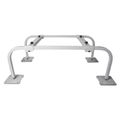
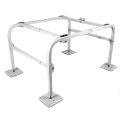
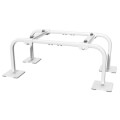
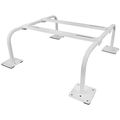
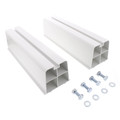


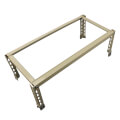
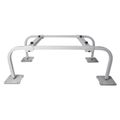
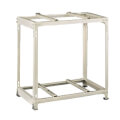
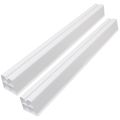
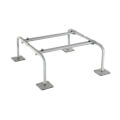
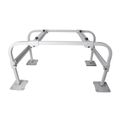
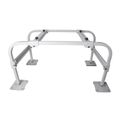
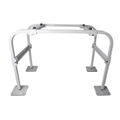
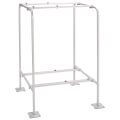
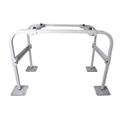
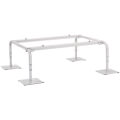
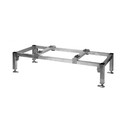

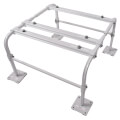
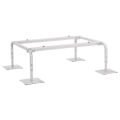
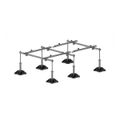
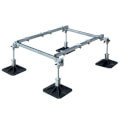
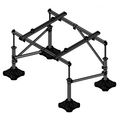
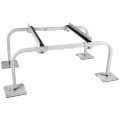
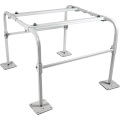
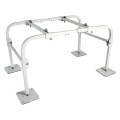

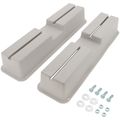
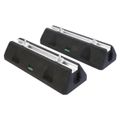
Mini split stands are support platforms that hold the outdoor condensing unit of a ductless mini-split system off the ground or away from a wall surface. Setting the unit on a stand keeps the coil and base pan clear of snow accumulation, standing water, and yard debris, all of which restrict airflow and speed up corrosion on the cabinet and coil fins over time. A stand also raises the unit to a height that keeps the service valves and electrical connections within easy reach for a technician during maintenance or a warranty repair. Options range from simple ground-level platforms to elevated legs, wall-mounted brackets, and rooftop curbs, so the right choice depends mostly on the installation surface, expected snow load, and how much clearance the equipment needs above grade. Getting this decision right at rough-in avoids a callback later for a unit that has settled, tilted, or iced over at the base.
Subcategories
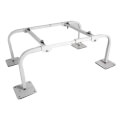
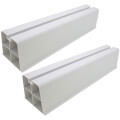
- Ground-Mount Stands: Ground-mount stands sit directly on soil, gravel, or a concrete pad and are the most common choice for residential installations at grade. They typically use composite or galvanized steel legs to keep the unit's base pan above standing water and light snow accumulation. Contractors favor these where the installation surface is level and there is no risk of flooding or heavy drifting snow. A pad or paver base underneath the stand helps keep the legs from sinking into soft ground over time.
- Wall-Mount Brackets: Wall-mount brackets hold the outdoor unit against an exterior wall above grade, which is useful where ground space is limited or where snow loads at grade level are a concern. The bracket needs to be anchored into framing or masonry rated to carry the unit's weight, not just the exterior sheathing or siding. This option is common on multi-family buildings and tight urban lots where a ground stand is not practical. Technicians should confirm the wall construction can support the unit before installing, since an undersized anchor point is a common failure point.
- Roof and Elevated Stands: Roof and elevated stands raise the condensing unit above a flat or low-slope roof deck, keeping it clear of ponding water and simplifying access for service. These stands distribute the unit's weight across a wider footprint to reduce point loading on the roofing membrane. They are most often specified on commercial or multi-family projects where rooftop placement is the only available location. A structural review of the roof deck is worth confirming before installation on this type of stand, since added rooftop equipment weight is not always accounted for in the original roof design.
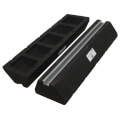
- Vibration-Dampening Pads and Accessories: Vibration-dampening pads sit between the unit and the stand itself to reduce compressor noise and vibration transmitted into a wall, roof deck, or foundation. These are frequently paired with any of the stand types above rather than sold as a standalone mounting solution. They matter most in noise-sensitive locations such as bedroom-adjacent walls or upper-floor rooftop installs. Adding a pad at install time is far simpler than retrofitting one after a noise complaint.
Buying Guide
Choosing a mini split stand starts with the installation surface: ground level, an exterior wall, or a roof deck each call for a different stand type, and mixing them up leads to an unstable or non-compliant install. Weight capacity is the next check, since the stand has to support the full operating weight of the outdoor unit plus any accumulated snow or ice load in colder climates, not just the dry weight listed on the equipment spec sheet. Material matters for longevity: galvanized steel resists corrosion better than untreated metal in coastal or high-humidity regions, while composite stands avoid rust entirely but need a rated weight capacity appropriate to the unit. Ground clearance is worth planning around local snowfall, since a unit set too low can end up buried or restricted during a heavy winter, which cuts efficiency and can trip a high-pressure fault. Wall-mount and roof installations both depend on the mounting surface itself being structurally adequate, so confirming the wall framing or roof deck can carry the load is part of the decision, not an afterthought. Finally, leave enough clearance around all sides of the unit for airflow and service access, since a stand that is technically strong enough but placed too close to a wall or railing still creates a maintenance problem down the road.
Frequently Asked Questions
Why does an outdoor mini split unit need a stand instead of sitting directly on the ground?
A stand keeps the base pan and coil clear of standing water, snow, and debris, which protects against corrosion and keeps airflow unrestricted. It also raises the unit to a more convenient height for service access.
Can a mini split unit be wall-mounted instead of using a ground stand?
Yes, wall-mount brackets are a common option where ground space is limited or snow loads at grade are a concern. The wall structure has to be confirmed capable of carrying the unit's weight before installing one.
How much ground clearance does a mini split unit need in a snowy climate?
Clearance needs vary by local snowfall, but the goal is keeping the unit's base pan above expected snow accumulation so airflow is not restricted and the unit does not end up partially buried.
Do rooftop mini split installations need a special type of stand?
Yes, roof and elevated stands are designed to distribute weight across a wider footprint to avoid concentrated point loads on the roofing membrane, and a structural review of the roof deck is worth confirming beforehand.
Are vibration-dampening pads necessary with every mini split stand?
They are not strictly necessary everywhere, but they matter most in noise-sensitive locations such as bedroom-adjacent walls or rooftop installs near occupied space, and they are easiest to add during the original installation.
