




Filters
SORT
Product Availability –
Brand –
Material –
Jaw Size –
Length (Inches) –
Product Type –
Review Score –
 --%3E %3Csvg version='1.1' id='Fill' xmlns='http://www.w3.org/2000/svg' xmlns:xlink='http://www.w3.org/1999/xlink' x='0px' y='0px' viewBox='0 0 100 100' enable-background='new 0 0 100 100' xml:space='preserve'%3E %3Cpath fill='%23F15C02' d='M79.44,0.95H20.56C9.78,0.95,0.95,9.78,0.95,20.56v58.87c0,10.79,8.82,19.61,19.61,19.61h58.87 c10.79,0,19.61-8.83,19.61-19.61V20.56C99.05,9.78,90.22,0.95,79.44,0.95z M65.38,58.24l9.38,29.58L49.69,69.78L24.5,87.82 l9.34-29.6L8.8,39.6l30.73-0.17c0,0,6.98-19.61,10-28.93c0.54,1.36,9.88,29.1,9.88,29.1H91.2L65.38,58.24z'/%3E %3C/svg%3E)
 --%3E %3Csvg version='1.1' id='With-RB' xmlns='http://www.w3.org/2000/svg' xmlns:xlink='http://www.w3.org/1999/xlink' x='0px' y='0px' viewBox='0 0 100 100' enable-background='new 0 0 100 100' xml:space='preserve'%3E %3Cpath fill='%23FBC8B4' d='M79.44,0.95H20.56C9.78,0.95,0.95,9.78,0.95,20.56v58.87c0,10.79,8.82,19.61,19.61,19.61h58.87 c10.79,0,19.61-8.83,19.61-19.61V20.56C99.05,9.78,90.22,0.95,79.44,0.95z M65.38,58.24l9.38,29.58L49.69,69.78L24.5,87.82 l9.34-29.6L8.8,39.6l30.73-0.17c0,0,6.98-19.61,10-28.93c0.54,1.36,9.88,29.1,9.88,29.1H91.2L65.38,58.24z'/%3E %3C/svg%3E)
Price Range –
Pipe Wrenches





 --%3E %3Csvg version='1.1' id='No-RB' xmlns='http://www.w3.org/2000/svg' xmlns:xlink='http://www.w3.org/1999/xlink' x='0px' y='0px' viewBox='0 0 100 100' enable-background='new 0 0 100 100' xml:space='preserve'%3E %3Cpath fill='%23CECECE' d='M79.44,0.95H20.56C9.78,0.95,0.95,9.78,0.95,20.56v58.87c0,10.79,8.82,19.61,19.61,19.61h58.87 c10.79,0,19.61-8.83,19.61-19.61V20.56C99.05,9.78,90.22,0.95,79.44,0.95z M65.38,58.24l9.38,29.58L49.69,69.78L24.5,87.82 l9.34-29.6L8.8,39.6l30.73-0.17c0,0,6.98-19.61,10-28.93c0.54,1.36,9.88,29.1,9.88,29.1H91.2L65.38,58.24z'/%3E %3C/svg%3E)








 --%3E %3Csvg version='1.1' id='Half' xmlns='http://www.w3.org/2000/svg' xmlns:xlink='http://www.w3.org/1999/xlink' x='0px' y='0px' viewBox='0 0 100 100' enable-background='new 0 0 100 100' xml:space='preserve'%3E %3Cg%3E %3Cpath fill='%23F15C02' d='M30.05,70.23l3.79-12.01L8.8,39.6l30.73-0.17c0,0,6.98-19.61,10-28.93c0.54,1.36,9.88,29.1,9.88,29.1h1.58 L93.71,7.18c-3.58-3.82-8.66-6.23-14.28-6.23H20.56C9.78,0.95,0.95,9.78,0.95,20.56v58.87c0,5.41,2.22,10.32,5.79,13.88 L30.05,70.23z'/%3E %3C/g%3E %3Cpath fill='%23FBC8B4' d='M93.71,7.18L60.98,39.6H91.2L65.38,58.24l9.38,29.58L49.69,69.78L24.5,87.82l5.55-17.59L6.75,93.32 c3.55,3.54,8.44,5.73,13.82,5.73h58.87c10.79,0,19.61-8.83,19.61-19.61V20.56C99.05,15.4,97.01,10.69,93.71,7.18z'/%3E %3C/svg%3E)
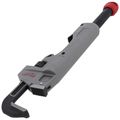


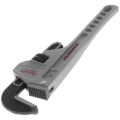

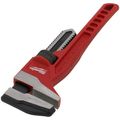
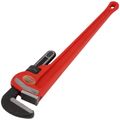
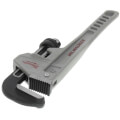


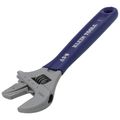
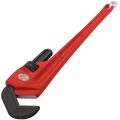

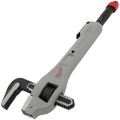
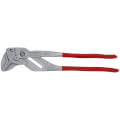
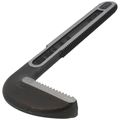
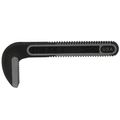

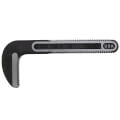
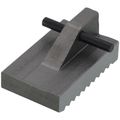
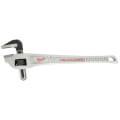
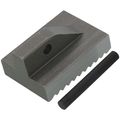

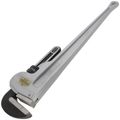
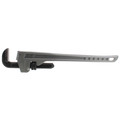
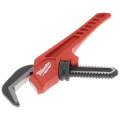
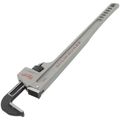
Pipe wrenches are the serrated-jaw hand tools plumbers and pipefitters use to grip and turn round pipe and fittings that a standard wrench cannot hold. A straight pipe wrench is the standard design, with heavy-duty models covering nominal sizes from 6 inches to 60 inches and pipe capacities from 3/4 inch to 8 inches depending on the model. Aluminum versions of the same wrench run close to 40 percent lighter than a comparable cast-iron model, which matters on jobs where a wrench stays in hand for hours. Offset and end wrenches trade some of that straight-wrench leverage for a jaw shape that reaches into confined spaces a standard wrench cannot enter, while chain wrenches add extra leverage for the largest pipe on a job. Picking the right wrench length and jaw style for the pipe size at hand keeps a fitting from stripping or a wrench from slipping under load.
Subcategories
- Straight Pipe Wrenches: Straight pipe wrenches are the standard design most plumbers reach for first, with heavy-duty lines covering nominal sizes from 6 inches to 60 inches. Pipe capacity on these wrenches ranges from 3/4 inch to 8 inches depending on the model length chosen. Longer wrenches deliver more leverage for large-diameter pipe, while shorter models suit tight fittings and smaller pipe runs.
- Aluminum Pipe Wrenches: Aluminum pipe wrenches use the same jaw design as a standard cast-iron wrench but run close to 40 percent lighter. Crews working long shifts or repetitive tasks benefit from the reduced arm fatigue an aluminum wrench offers compared to a cast-iron equivalent. The lighter material still holds up to daily plumbing and pipefitting work despite the weight savings.
- Offset Pipe Wrenches: Offset pipe wrenches use a narrower hook jaw set at an angle to the handle, letting the tool reach into tight framing bays and confined mechanical spaces. Plumbers and pipefitters use this jaw shape when a standard straight wrench cannot fit around a fitting. The angled jaw trades some straight-line leverage for access in cramped work areas.
- End Pipe Wrenches: End pipe wrenches pair one fixed jaw with one adjustable jaw, built for gripping pipe and fittings in confined spaces where a traditional wrench cannot reach. The fixed-and-adjustable jaw arrangement excels at precise, repeatable adjustments compared to a two-adjustable-jaw design. Pipefitters use this style for turning fittings close to walls, floors, or other pipe runs.
- Chain Wrenches: Chain wrenches, also called chain tongs, wrap a chain around the pipe instead of using rigid jaws, adding extra leverage for the toughest turning jobs. The chain design handles large-diameter or irregularly shaped pipe that a standard jaw wrench cannot grip evenly. Pipefitters reach for a chain wrench when a straight or offset wrench runs out of capacity on oversized pipe.
Buying Guide
Match wrench length to the pipe diameter before anything else. A 14 inch straight pipe wrench covers roughly 1/2 inch to 1-1/2 inch pipe, while sizes climb toward 60 inches for pipe capacities up to 8 inches, so grabbing an undersized wrench for large pipe risks a stripped fitting and a slipped grip. Material choice comes next. Steel wrenches hold up to daily heavy-duty use and cost less up front, while aluminum wrenches run close to 40 percent lighter, a real advantage for crews swinging a wrench for hours or carrying tools through crawlspaces and tight mechanical rooms all day. Jaw style depends on where the work happens. A straight wrench delivers the most leverage in open space, an offset wrench reaches into tight framing bays with its narrower hook jaw, and an end wrench works best in confined spots where only one adjustable jaw fits. For oversized or irregular pipe, a chain wrench wraps around the material instead of relying on fixed jaws, covering diameters a standard jaw wrench cannot grip evenly. Stocking a range of Pipe Wrenches, from a mid-size straight wrench for everyday work to a chain wrench for oversized pipe, covers most plumbing and pipefitting jobs without carrying every size on every truck. Checking jaw wear and replacing worn teeth keeps any wrench gripping properly over time.
Frequently Asked Questions
What size pipe wrench do I need for 1 inch pipe?
A 14 inch straight pipe wrench typically covers pipe from about 1/2 inch to 1-1/2 inch, putting 1 inch pipe comfortably within its capacity. Going a size larger than the minimum needed gives extra leverage without adding much bulk. Checking the manufacturer's capacity chart for the specific wrench line confirms the exact range before buying.
What is the benefit of an aluminum pipe wrench over a steel one?
An aluminum pipe wrench runs close to 40 percent lighter than a comparable cast-iron model while covering the same jaw sizes and pipe capacities. The weight savings cuts down on arm fatigue for crews using a wrench repeatedly through a shift. Steel wrenches still hold their own on raw durability and typically cost less than an aluminum equivalent.
When should an offset pipe wrench be used instead of a straight wrench?
An offset pipe wrench uses a narrower hook jaw set at an angle to the handle, letting it reach into tight framing bays and confined mechanical spaces a straight wrench cannot enter. Plumbers reach for this style when a fitting sits close to a wall, floor, or another pipe run. Straight wrenches still deliver more raw leverage in open space, so offset models work best as a second wrench for tight spots rather than a full replacement.
What is a chain wrench used for?
A chain wrench, also called a chain tong, wraps a chain around the pipe instead of gripping with fixed jaws, adding extra leverage for oversized or irregularly shaped pipe. Pipefitters use this style when a standard jaw wrench runs out of capacity or cannot grip the material evenly. The chain design adjusts to a wider range of diameters than a fixed-jaw wrench of similar size.
How do I know when a pipe wrench needs to be replaced?
Worn or rounded teeth on the jaw are the clearest sign a pipe wrench needs replacing, since dull teeth slip on pipe instead of biting into it. A loose or wobbly adjustable jaw is another sign the wrench has reached the end of its service life. Replacing a worn wrench before it slips under load avoids stripped fittings and skinned knuckles on the job.
