




Filters
SORT
Product Availability –
Application –
Programmability –
Mount –
Wireless –
Wiring –
Review Score –
 --%3E %3Csvg version='1.1' id='Fill' xmlns='http://www.w3.org/2000/svg' xmlns:xlink='http://www.w3.org/1999/xlink' x='0px' y='0px' viewBox='0 0 100 100' enable-background='new 0 0 100 100' xml:space='preserve'%3E %3Cpath fill='%23F15C02' d='M79.44,0.95H20.56C9.78,0.95,0.95,9.78,0.95,20.56v58.87c0,10.79,8.82,19.61,19.61,19.61h58.87 c10.79,0,19.61-8.83,19.61-19.61V20.56C99.05,9.78,90.22,0.95,79.44,0.95z M65.38,58.24l9.38,29.58L49.69,69.78L24.5,87.82 l9.34-29.6L8.8,39.6l30.73-0.17c0,0,6.98-19.61,10-28.93c0.54,1.36,9.88,29.1,9.88,29.1H91.2L65.38,58.24z'/%3E %3C/svg%3E)
 --%3E %3Csvg version='1.1' id='With-RB' xmlns='http://www.w3.org/2000/svg' xmlns:xlink='http://www.w3.org/1999/xlink' x='0px' y='0px' viewBox='0 0 100 100' enable-background='new 0 0 100 100' xml:space='preserve'%3E %3Cpath fill='%23FBC8B4' d='M79.44,0.95H20.56C9.78,0.95,0.95,9.78,0.95,20.56v58.87c0,10.79,8.82,19.61,19.61,19.61h58.87 c10.79,0,19.61-8.83,19.61-19.61V20.56C99.05,9.78,90.22,0.95,79.44,0.95z M65.38,58.24l9.38,29.58L49.69,69.78L24.5,87.82 l9.34-29.6L8.8,39.6l30.73-0.17c0,0,6.98-19.61,10-28.93c0.54,1.36,9.88,29.1,9.88,29.1H91.2L65.38,58.24z'/%3E %3C/svg%3E)
Price Range –
Programmable Thermostats


 --%3E %3Csvg version='1.1' id='Half' xmlns='http://www.w3.org/2000/svg' xmlns:xlink='http://www.w3.org/1999/xlink' x='0px' y='0px' viewBox='0 0 100 100' enable-background='new 0 0 100 100' xml:space='preserve'%3E %3Cg%3E %3Cpath fill='%23F15C02' d='M30.05,70.23l3.79-12.01L8.8,39.6l30.73-0.17c0,0,6.98-19.61,10-28.93c0.54,1.36,9.88,29.1,9.88,29.1h1.58 L93.71,7.18c-3.58-3.82-8.66-6.23-14.28-6.23H20.56C9.78,0.95,0.95,9.78,0.95,20.56v58.87c0,5.41,2.22,10.32,5.79,13.88 L30.05,70.23z'/%3E %3C/g%3E %3Cpath fill='%23FBC8B4' d='M93.71,7.18L60.98,39.6H91.2L65.38,58.24l9.38,29.58L49.69,69.78L24.5,87.82l5.55-17.59L6.75,93.32 c3.55,3.54,8.44,5.73,13.82,5.73h58.87c10.79,0,19.61-8.83,19.61-19.61V20.56C99.05,15.4,97.01,10.69,93.71,7.18z'/%3E %3C/svg%3E)




 --%3E %3Csvg version='1.1' id='No-RB' xmlns='http://www.w3.org/2000/svg' xmlns:xlink='http://www.w3.org/1999/xlink' x='0px' y='0px' viewBox='0 0 100 100' enable-background='new 0 0 100 100' xml:space='preserve'%3E %3Cpath fill='%23CECECE' d='M79.44,0.95H20.56C9.78,0.95,0.95,9.78,0.95,20.56v58.87c0,10.79,8.82,19.61,19.61,19.61h58.87 c10.79,0,19.61-8.83,19.61-19.61V20.56C99.05,9.78,90.22,0.95,79.44,0.95z M65.38,58.24l9.38,29.58L49.69,69.78L24.5,87.82 l9.34-29.6L8.8,39.6l30.73-0.17c0,0,6.98-19.61,10-28.93c0.54,1.36,9.88,29.1,9.88,29.1H91.2L65.38,58.24z'/%3E %3C/svg%3E)


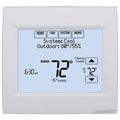


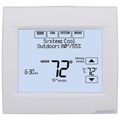
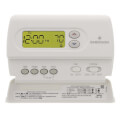


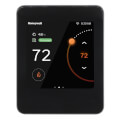


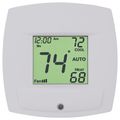


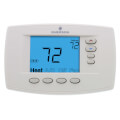


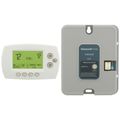


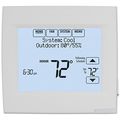
Programmable Thermostats let a homeowner or building set a heating and cooling schedule that runs automatically instead of adjusting the temperature by hand throughout the day. Models such as Honeywell Home's 7-day touchscreen units allow up to four time periods per day, with separate settings for weekdays and weekends, so a schedule can match when a house is actually occupied. Many current models also include smart response technology that learns how long a system takes to reach a set temperature and starts the cycle early enough to hit that target right on schedule, along with auto changeover that switches between heating and cooling automatically based on indoor temperature. Because these units support standard heat, cool, auto, and off modes and typically run on batteries, they install into most existing low-voltage thermostat wiring without extra equipment. For HVAC contractors doing thermostat swaps or new system installs, programmable models give customers automated comfort and lower run time without moving up to a full smart, connected thermostat.
Subcategories
- 7-Day Programmable Thermostats: Seven-day models allow a fully different schedule for every day of the week, with up to four temperature periods per day on many units. Installers spec these for households with varied daily routines where weekday and weekend schedules aren't enough. The flexibility comes at the cost of a longer initial setup compared to simpler schedule types.
- 5-2 Day Programmable Thermostats: 5-2 day models use one schedule for the five weekdays and a separate schedule for the two weekend days, covering the most common household routine with less setup than a full 7-day program. Contractors often recommend these for straightforward residential replacements where the homeowner doesn't need day-by-day variation. Four programmable periods per day is typical within each of the two schedules.
- Touchscreen Programmable Thermostats: Touchscreen models, like Honeywell Home's RTH7600D, combine a large display with simplified menu navigation for setting schedules and adjusting temperature. These suit customers who want an easier interface than button-based programming without adding wireless connectivity. Backlit displays and filter change alerts are common features in this subcategory.
- Non-Connected Programmable Thermostats: Non-connected models handle scheduling entirely on the device itself, with no WiFi or app connection required. Installers use these when a customer wants automated scheduling but doesn't want or need remote access, or when network connectivity at the install site is unreliable. Battery-powered operation keeps installation simple since no common wire is required.
Buying Guide
Start by matching the thermostat's schedule type to how the household actually uses the space. A 7-day model makes sense when every day's routine is different, while a 5-2 day model covers the common weekday-versus-weekend pattern with a simpler setup process. Programmable Thermostats generally support up to four temperature periods per day regardless of schedule type, so the real decision is how many distinct daily schedules the customer needs rather than how many periods within a day. Next, confirm system compatibility: check whether the installation is conventional forced-air, heat pump, or multi-stage, since not every programmable model supports every system type, and auto changeover features only matter on systems that actually run both heating and cooling. Battery-powered, non-connected units simplify installation because they don't require a common wire, which matters on older systems where that wire was never run. If the customer wants humidity readout alongside temperature control, a touchscreen model with that feature saves an extra device. Look for smart response functionality on jobs where hitting a target temperature exactly on schedule matters, since that feature adjusts start time based on how long the system actually takes to recover. Finally, factor in filter change and battery alerts as a convenience that reduces callback likelihood, since a low battery is one of the more common no-heat service calls tied to programmable models.
Frequently Asked Questions
What's the difference between a 7-day and a 5-2 day programmable thermostat?
A 7-day thermostat allows a different schedule for every single day of the week, while a 5-2 day model uses one schedule for the five weekdays and a separate schedule for the two weekend days. Both formats commonly support up to four temperature periods within each day.
Do programmable thermostats need a common wire?
Many battery-powered programmable thermostats don't require a common wire, since they run on batteries instead of drawing power from the system's low-voltage wiring. That makes them a practical option for older installations where a common wire was never run.
What does smart response technology do on a programmable thermostat?
Smart response technology learns how long a heating or cooling system takes to reach a set temperature and starts the cycle early enough to hit that target exactly when scheduled. It's a feature found on several Honeywell Home 7-day programmable models.
Can a programmable thermostat handle both heating and cooling automatically?
Auto changeover mode lets a compatible thermostat automatically select heating or cooling based on current indoor temperature. That feature only applies to systems capable of running both heating and cooling.
How many temperature periods can be set per day on a programmable thermostat?
Most 7-day and 5-2 day programmable thermostats support up to four temperature periods per day. That's enough to set distinct settings for morning, daytime, evening, and overnight.
