




Filters
SORT
Product Availability –
Brand –
BTU Output –
BTU Input –
Vent Type –
Features –
Review Score –
 --%3E %3Csvg version='1.1' id='Fill' xmlns='http://www.w3.org/2000/svg' xmlns:xlink='http://www.w3.org/1999/xlink' x='0px' y='0px' viewBox='0 0 100 100' enable-background='new 0 0 100 100' xml:space='preserve'%3E %3Cpath fill='%23F15C02' d='M79.44,0.95H20.56C9.78,0.95,0.95,9.78,0.95,20.56v58.87c0,10.79,8.82,19.61,19.61,19.61h58.87 c10.79,0,19.61-8.83,19.61-19.61V20.56C99.05,9.78,90.22,0.95,79.44,0.95z M65.38,58.24l9.38,29.58L49.69,69.78L24.5,87.82 l9.34-29.6L8.8,39.6l30.73-0.17c0,0,6.98-19.61,10-28.93c0.54,1.36,9.88,29.1,9.88,29.1H91.2L65.38,58.24z'/%3E %3C/svg%3E)
 --%3E %3Csvg version='1.1' id='With-RB' xmlns='http://www.w3.org/2000/svg' xmlns:xlink='http://www.w3.org/1999/xlink' x='0px' y='0px' viewBox='0 0 100 100' enable-background='new 0 0 100 100' xml:space='preserve'%3E %3Cpath fill='%23FBC8B4' d='M79.44,0.95H20.56C9.78,0.95,0.95,9.78,0.95,20.56v58.87c0,10.79,8.82,19.61,19.61,19.61h58.87 c10.79,0,19.61-8.83,19.61-19.61V20.56C99.05,9.78,90.22,0.95,79.44,0.95z M65.38,58.24l9.38,29.58L49.69,69.78L24.5,87.82 l9.34-29.6L8.8,39.6l30.73-0.17c0,0,6.98-19.61,10-28.93c0.54,1.36,9.88,29.1,9.88,29.1H91.2L65.38,58.24z'/%3E %3C/svg%3E)
Price Range –
Propane Boilers


 --%3E %3Csvg version='1.1' id='Half' xmlns='http://www.w3.org/2000/svg' xmlns:xlink='http://www.w3.org/1999/xlink' x='0px' y='0px' viewBox='0 0 100 100' enable-background='new 0 0 100 100' xml:space='preserve'%3E %3Cg%3E %3Cpath fill='%23F15C02' d='M30.05,70.23l3.79-12.01L8.8,39.6l30.73-0.17c0,0,6.98-19.61,10-28.93c0.54,1.36,9.88,29.1,9.88,29.1h1.58 L93.71,7.18c-3.58-3.82-8.66-6.23-14.28-6.23H20.56C9.78,0.95,0.95,9.78,0.95,20.56v58.87c0,5.41,2.22,10.32,5.79,13.88 L30.05,70.23z'/%3E %3C/g%3E %3Cpath fill='%23FBC8B4' d='M93.71,7.18L60.98,39.6H91.2L65.38,58.24l9.38,29.58L49.69,69.78L24.5,87.82l5.55-17.59L6.75,93.32 c3.55,3.54,8.44,5.73,13.82,5.73h58.87c10.79,0,19.61-8.83,19.61-19.61V20.56C99.05,15.4,97.01,10.69,93.71,7.18z'/%3E %3C/svg%3E)


 --%3E %3Csvg version='1.1' id='No-RB' xmlns='http://www.w3.org/2000/svg' xmlns:xlink='http://www.w3.org/1999/xlink' x='0px' y='0px' viewBox='0 0 100 100' enable-background='new 0 0 100 100' xml:space='preserve'%3E %3Cpath fill='%23CECECE' d='M79.44,0.95H20.56C9.78,0.95,0.95,9.78,0.95,20.56v58.87c0,10.79,8.82,19.61,19.61,19.61h58.87 c10.79,0,19.61-8.83,19.61-19.61V20.56C99.05,9.78,90.22,0.95,79.44,0.95z M65.38,58.24l9.38,29.58L49.69,69.78L24.5,87.82 l9.34-29.6L8.8,39.6l30.73-0.17c0,0,6.98-19.61,10-28.93c0.54,1.36,9.88,29.1,9.88,29.1H91.2L65.38,58.24z'/%3E %3C/svg%3E)
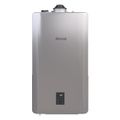


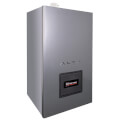
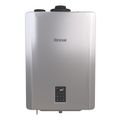

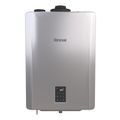


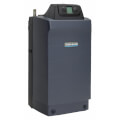


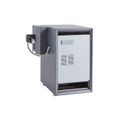

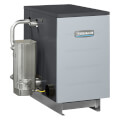
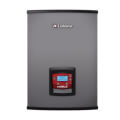
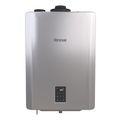

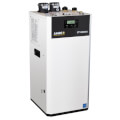
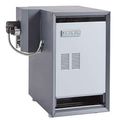
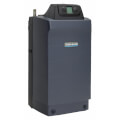
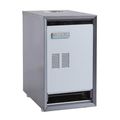

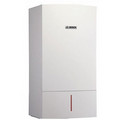
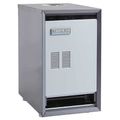
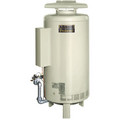
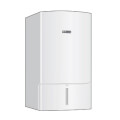
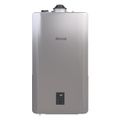
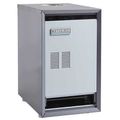



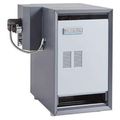

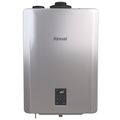
Propane boilers are hydronic heating appliances that burn liquid propane gas to heat water for space heating, radiant floor systems, or domestic hot water production. They function the same way as natural gas boilers internally, but the burner, gas valve, and orifices are configured specifically for propane's different combustion characteristics, so the two fuel types are not interchangeable without a conversion kit. Propane boilers are the standard choice in rural areas and other locations without access to a natural gas utility line, where a propane tank supplies fuel instead. Contractors select between combi models, which provide both space heating and domestic hot water from a single unit, and heat-only models paired with a separate water heater, depending on a building's hot water demand. Sizing a propane boiler correctly to a building's heat load affects both comfort and long-term operating efficiency.
Subcategories
- Combi Propane Boilers: Combi boilers supply both space heating and domestic hot water from a single compact unit, eliminating the need for a separate water heater. They're popular in homes with limited mechanical room space since one appliance handles both functions. Hot water output capacity varies by model, so sizing needs to account for simultaneous heating and hot water demand. Contractors often choose combi units for smaller homes or those with limited fuel storage capacity.
- Heat-Only Propane Boilers: Heat-only boilers are dedicated to space heating and are paired with a separate propane or electric water heater for domestic hot water needs. They're a common choice in larger homes where hot water demand exceeds what a combi unit can efficiently supply alongside heating. Because they handle only one function, sizing calculations focus solely on the building's heat load. This configuration also allows the water heater to be replaced independently of the boiler.
- High-Efficiency Condensing Propane Boilers: Condensing boilers extract additional heat from flue gases before they exhaust, achieving higher efficiency than standard non-condensing models. They require a condensate drain to handle the acidic water byproduct produced during condensing operation. Contractors specify these for homeowners prioritizing lower fuel consumption over the appliance's service life. Venting requirements typically differ from standard boilers due to the lower flue gas temperatures involved.
Buying Guide
Sizing is the most important decision when selecting a propane boiler. An undersized unit struggles to maintain temperature during peak cold, while an oversized unit short-cycles, reducing both comfort and equipment lifespan. A proper heat loss calculation for the building, rather than a rule-of-thumb estimate, should drive the sizing decision.
Next, decide between a combi and heat-only configuration based on the building's hot water demand. Homes with multiple bathrooms or high simultaneous hot water use often outgrow what a combi propane boiler can comfortably deliver alongside space heating, making a heat-only boiler paired with a dedicated water heater the better fit. Smaller homes with modest hot water needs are often well served by a combi unit's space savings.
Venting also needs early attention, since condensing and non-condensing propane boilers have different flue material and clearance requirements. Confirm venting options before finalizing a model, especially in retrofit situations where existing venting may not support a new appliance. Finally, factor in the propane tank size and delivery schedule a homeowner already has or plans to install, since boiler fuel consumption at maximum output affects how often the tank needs refilling.
Frequently Asked Questions
Can a natural gas boiler be converted to run on propane?
Some boiler models support conversion with a manufacturer-approved kit that swaps the orifices and adjusts the gas valve, but not all models are convertible. Checking the manufacturer's specifications before assuming a conversion is possible avoids an unsafe or non-functional setup.
What's the difference between a combi and heat-only propane boiler?
A combi boiler provides both space heating and domestic hot water from one unit, while a heat-only boiler handles space heating alone and requires a separate water heater. The choice depends on a building's hot water demand and available mechanical space.
Do propane boilers cost more to run than natural gas boilers?
Operating cost depends on local propane and natural gas pricing, which varies by region and market conditions. Propane boilers are typically chosen where natural gas service isn't available rather than for a cost advantage.
Why do condensing propane boilers need a condensate drain?
Condensing boilers cool flue gases enough to extract extra heat, which causes water vapor in the exhaust to condense into acidic liquid. That liquid needs a proper drain and, in many cases, a neutralizer before it can be discharged.
How is a propane boiler sized for a home?
Sizing should be based on a heat loss calculation for the specific building, accounting for square footage, insulation, window area, and climate. Sizing off the old boiler's capacity alone can carry over a mismatch if the original unit was never sized correctly.
