




Filters
SORT
Product Availability –
Brand –
Application –
Mount –
Stages –
Features –
Review Score –
 --%3E %3Csvg version='1.1' id='Fill' xmlns='http://www.w3.org/2000/svg' xmlns:xlink='http://www.w3.org/1999/xlink' x='0px' y='0px' viewBox='0 0 100 100' enable-background='new 0 0 100 100' xml:space='preserve'%3E %3Cpath fill='%23F15C02' d='M79.44,0.95H20.56C9.78,0.95,0.95,9.78,0.95,20.56v58.87c0,10.79,8.82,19.61,19.61,19.61h58.87 c10.79,0,19.61-8.83,19.61-19.61V20.56C99.05,9.78,90.22,0.95,79.44,0.95z M65.38,58.24l9.38,29.58L49.69,69.78L24.5,87.82 l9.34-29.6L8.8,39.6l30.73-0.17c0,0,6.98-19.61,10-28.93c0.54,1.36,9.88,29.1,9.88,29.1H91.2L65.38,58.24z'/%3E %3C/svg%3E)
 --%3E %3Csvg version='1.1' id='With-RB' xmlns='http://www.w3.org/2000/svg' xmlns:xlink='http://www.w3.org/1999/xlink' x='0px' y='0px' viewBox='0 0 100 100' enable-background='new 0 0 100 100' xml:space='preserve'%3E %3Cpath fill='%23FBC8B4' d='M79.44,0.95H20.56C9.78,0.95,0.95,9.78,0.95,20.56v58.87c0,10.79,8.82,19.61,19.61,19.61h58.87 c10.79,0,19.61-8.83,19.61-19.61V20.56C99.05,9.78,90.22,0.95,79.44,0.95z M65.38,58.24l9.38,29.58L49.69,69.78L24.5,87.82 l9.34-29.6L8.8,39.6l30.73-0.17c0,0,6.98-19.61,10-28.93c0.54,1.36,9.88,29.1,9.88,29.1H91.2L65.38,58.24z'/%3E %3C/svg%3E)
Price Range –
Smart Thermostats


 --%3E %3Csvg version='1.1' id='Half' xmlns='http://www.w3.org/2000/svg' xmlns:xlink='http://www.w3.org/1999/xlink' x='0px' y='0px' viewBox='0 0 100 100' enable-background='new 0 0 100 100' xml:space='preserve'%3E %3Cg%3E %3Cpath fill='%23F15C02' d='M30.05,70.23l3.79-12.01L8.8,39.6l30.73-0.17c0,0,6.98-19.61,10-28.93c0.54,1.36,9.88,29.1,9.88,29.1h1.58 L93.71,7.18c-3.58-3.82-8.66-6.23-14.28-6.23H20.56C9.78,0.95,0.95,9.78,0.95,20.56v58.87c0,5.41,2.22,10.32,5.79,13.88 L30.05,70.23z'/%3E %3C/g%3E %3Cpath fill='%23FBC8B4' d='M93.71,7.18L60.98,39.6H91.2L65.38,58.24l9.38,29.58L49.69,69.78L24.5,87.82l5.55-17.59L6.75,93.32 c3.55,3.54,8.44,5.73,13.82,5.73h58.87c10.79,0,19.61-8.83,19.61-19.61V20.56C99.05,15.4,97.01,10.69,93.71,7.18z'/%3E %3C/svg%3E)



 --%3E %3Csvg version='1.1' id='No-RB' xmlns='http://www.w3.org/2000/svg' xmlns:xlink='http://www.w3.org/1999/xlink' x='0px' y='0px' viewBox='0 0 100 100' enable-background='new 0 0 100 100' xml:space='preserve'%3E %3Cpath fill='%23CECECE' d='M79.44,0.95H20.56C9.78,0.95,0.95,9.78,0.95,20.56v58.87c0,10.79,8.82,19.61,19.61,19.61h58.87 c10.79,0,19.61-8.83,19.61-19.61V20.56C99.05,9.78,90.22,0.95,79.44,0.95z M65.38,58.24l9.38,29.58L49.69,69.78L24.5,87.82 l9.34-29.6L8.8,39.6l30.73-0.17c0,0,6.98-19.61,10-28.93c0.54,1.36,9.88,29.1,9.88,29.1H91.2L65.38,58.24z'/%3E %3C/svg%3E)





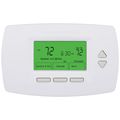


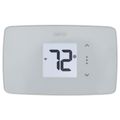


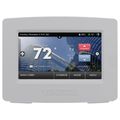


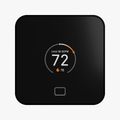
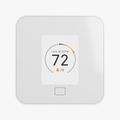
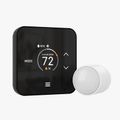

Smart thermostats are Wi-Fi connected temperature controls that let a homeowner or building manager adjust heating and cooling schedules remotely through a phone app in addition to the physical wall unit. Beyond basic scheduling, most models track run time, learn occupancy patterns, and flag equipment issues such as a system that is running longer than expected for the outdoor temperature. Wiring compatibility is the first thing to check on any installation, since smart thermostats need specific terminal connections, most commonly a C wire for continuous power, that older systems without one may not have run to the thermostat location. Contractors installing smart thermostats also confirm the equipment type, since heat pump systems, multi stage furnaces, and simple single stage systems each need a thermostat configured for that specific staging before it will control the equipment correctly.
Subcategories
- Wi-Fi Thermostats: Wi-Fi thermostats connect directly to a home or building network to enable remote access and scheduling through a mobile app. Homeowners and property managers use these for basic remote control and energy tracking without needing a full home automation system. A stable network connection at the thermostat location is required, so signal strength should be checked before installation in larger homes. Most models still function as a standard programmable thermostat if the network connection drops.
- Learning Thermostats: Learning thermostats build a schedule automatically based on observed temperature adjustments and occupancy patterns rather than requiring manual programming. These suit customers who want energy savings without setting up a schedule themselves, since the thermostat adapts over the first few weeks of use. Sensors for occupancy and ambient conditions are built into the unit to support this automatic scheduling. Technicians installing these note that the learning period requires normal household use to produce an accurate schedule.
- Multi-Stage Compatible Thermostats: Multi-stage compatible thermostats are built to control two stage and variable capacity heating and cooling equipment, coordinating multiple compressor or heat stages rather than a single on off cycle. These are specified for heat pump systems and multi stage furnaces where a single stage thermostat cannot properly sequence the equipment. Correct staging configuration during setup is required for the connected equipment to run efficiently. Installers confirm equipment staging before selecting a thermostat model rather than after installation.
Buying Guide
Confirming wiring compatibility comes before anything else when selecting a smart thermostat, since many smart models need a dedicated C wire for continuous power that some older two wire or four wire systems never had installed. Where a C wire is not available, some smart thermostats include a power extender kit that borrows power through the existing wiring, though this option needs to be confirmed against the specific equipment before counting on it. Matching the thermostat to the connected equipment type is the next step, since a heat pump, a multi stage furnace, and a simple single stage system each require different staging configuration to run correctly.
Network requirements matter as much as HVAC compatibility for smart thermostats, so verifying signal strength at the installation location avoids a unit that cannot maintain its Wi-Fi connection reliably. Larger homes with a thermostat located far from the router sometimes need a network extender before installation to keep the remote features functioning. Customers focused on hands off convenience are usually better served by a learning thermostat, while those who want direct schedule control may prefer a standard Wi-Fi model with manual programming. Checking manufacturer compatibility lists against the specific furnace, air conditioner, or heat pump model before purchase remains the most reliable way to avoid a smart thermostat that cannot fully control the connected system's staging.
Frequently Asked Questions
What happens if a system does not have a C wire for the smart thermostat?
Some smart thermostats include a power extender kit or similar accessory that borrows power through the existing thermostat wiring without needing a new C wire run. Compatibility with a specific power extender kit depends on the equipment and existing wiring configuration, so checking the thermostat's documentation before installation is necessary. Running a new C wire remains the most reliable long term solution where it is practical.
Can a smart thermostat control a heat pump the same way it controls a furnace?
A smart thermostat needs to be configured specifically for heat pump operation, which involves different staging and auxiliary heat settings than a standard gas furnace setup. Selecting the wrong equipment type during setup can cause the auxiliary heat to run more than necessary or the system to short cycle. Confirming equipment type during initial configuration avoids these issues from the start.
Do smart thermostats still work if the Wi-Fi goes down?
Most smart thermostats continue running their last programmed schedule locally even without an active network connection, since scheduling logic runs on the thermostat itself rather than requiring constant cloud access. Remote access and notifications are unavailable during an outage, but basic heating and cooling control keeps functioning. Restoring the network connection returns remote features without needing to reconfigure the thermostat.
How long does a learning thermostat take to build an accurate schedule?
Most learning thermostats need one to two weeks of normal household use before the automatic schedule closely matches actual occupancy and temperature preferences. Manual adjustments made during that period help the thermostat refine its schedule faster than passive observation alone. Ongoing use continues to fine tune the schedule beyond the initial learning period.
Is professional installation required for a smart thermostat?
Basic Wi-Fi thermostat swaps on standard single stage systems are within reach for an experienced do it yourself installer who is comfortable identifying existing thermostat wiring. Multi stage and heat pump systems benefit from professional installation since correct staging configuration is more involved and mistakes can affect equipment performance. Confirming wiring and equipment compatibility ahead of time helps determine which approach fits a given job.
