




Filters
SORT
Product Availability –
Brand –
Product Type –
Application –
Material –
Inlet Type –
Outlet Type –
Mount –
Review Score –
 --%3E %3Csvg version='1.1' id='Fill' xmlns='http://www.w3.org/2000/svg' xmlns:xlink='http://www.w3.org/1999/xlink' x='0px' y='0px' viewBox='0 0 100 100' enable-background='new 0 0 100 100' xml:space='preserve'%3E %3Cpath fill='%23F15C02' d='M79.44,0.95H20.56C9.78,0.95,0.95,9.78,0.95,20.56v58.87c0,10.79,8.82,19.61,19.61,19.61h58.87 c10.79,0,19.61-8.83,19.61-19.61V20.56C99.05,9.78,90.22,0.95,79.44,0.95z M65.38,58.24l9.38,29.58L49.69,69.78L24.5,87.82 l9.34-29.6L8.8,39.6l30.73-0.17c0,0,6.98-19.61,10-28.93c0.54,1.36,9.88,29.1,9.88,29.1H91.2L65.38,58.24z'/%3E %3C/svg%3E)
 --%3E %3Csvg version='1.1' id='With-RB' xmlns='http://www.w3.org/2000/svg' xmlns:xlink='http://www.w3.org/1999/xlink' x='0px' y='0px' viewBox='0 0 100 100' enable-background='new 0 0 100 100' xml:space='preserve'%3E %3Cpath fill='%23FBC8B4' d='M79.44,0.95H20.56C9.78,0.95,0.95,9.78,0.95,20.56v58.87c0,10.79,8.82,19.61,19.61,19.61h58.87 c10.79,0,19.61-8.83,19.61-19.61V20.56C99.05,9.78,90.22,0.95,79.44,0.95z M65.38,58.24l9.38,29.58L49.69,69.78L24.5,87.82 l9.34-29.6L8.8,39.6l30.73-0.17c0,0,6.98-19.61,10-28.93c0.54,1.36,9.88,29.1,9.88,29.1H91.2L65.38,58.24z'/%3E %3C/svg%3E)
Price Range –
Outlet Boxes


 --%3E %3Csvg version='1.1' id='Half' xmlns='http://www.w3.org/2000/svg' xmlns:xlink='http://www.w3.org/1999/xlink' x='0px' y='0px' viewBox='0 0 100 100' enable-background='new 0 0 100 100' xml:space='preserve'%3E %3Cg%3E %3Cpath fill='%23F15C02' d='M30.05,70.23l3.79-12.01L8.8,39.6l30.73-0.17c0,0,6.98-19.61,10-28.93c0.54,1.36,9.88,29.1,9.88,29.1h1.58 L93.71,7.18c-3.58-3.82-8.66-6.23-14.28-6.23H20.56C9.78,0.95,0.95,9.78,0.95,20.56v58.87c0,5.41,2.22,10.32,5.79,13.88 L30.05,70.23z'/%3E %3C/g%3E %3Cpath fill='%23FBC8B4' d='M93.71,7.18L60.98,39.6H91.2L65.38,58.24l9.38,29.58L49.69,69.78L24.5,87.82l5.55-17.59L6.75,93.32 c3.55,3.54,8.44,5.73,13.82,5.73h58.87c10.79,0,19.61-8.83,19.61-19.61V20.56C99.05,15.4,97.01,10.69,93.71,7.18z'/%3E %3C/svg%3E)


 --%3E %3Csvg version='1.1' id='No-RB' xmlns='http://www.w3.org/2000/svg' xmlns:xlink='http://www.w3.org/1999/xlink' x='0px' y='0px' viewBox='0 0 100 100' enable-background='new 0 0 100 100' xml:space='preserve'%3E %3Cpath fill='%23CECECE' d='M79.44,0.95H20.56C9.78,0.95,0.95,9.78,0.95,20.56v58.87c0,10.79,8.82,19.61,19.61,19.61h58.87 c10.79,0,19.61-8.83,19.61-19.61V20.56C99.05,9.78,90.22,0.95,79.44,0.95z M65.38,58.24l9.38,29.58L49.69,69.78L24.5,87.82 l9.34-29.6L8.8,39.6l30.73-0.17c0,0,6.98-19.61,10-28.93c0.54,1.36,9.88,29.1,9.88,29.1H91.2L65.38,58.24z'/%3E %3C/svg%3E)


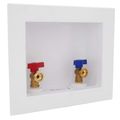

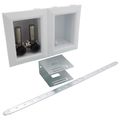

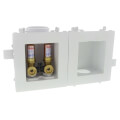

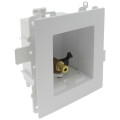
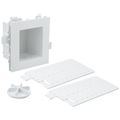
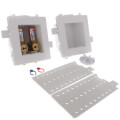

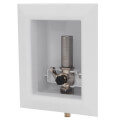
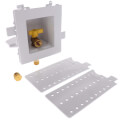



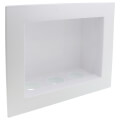

Outlet Boxes are the enclosures that house electrical receptacles, switches, and light fixture connections, providing a code-compliant housing point for wiring splices and devices. Carlon's nonmetallic single-gang boxes, built around the Zip Box Blue line, cover the most common one-device installation, while 2, 3, and 4-gang boxes plus 4 inch square boxes handle larger device groupings or junction points. Round and octagon ceiling boxes support light fixtures and ceiling fans, and weatherproof boxes extend outdoor coverage to exterior receptacles and switches exposed to the elements. Electricians select box style based on device count, mounting location, and whether the installation is new construction or a retrofit into existing finished walls. Getting box type and gang count right before rough-in avoids cutting a larger opening in finished drywall later.
Subcategories
- Single-Gang Boxes: Single-gang boxes hold one device, either a switch or a receptacle, and cover the majority of standard residential and light commercial installations. Carlon's nonmetallic Zip Box Blue line, including the B118A model, is built in this configuration from PVC material that resists rust and corrosion compared to metal boxes. Electricians use this box style for any location with just one device and no need for ganged switches or receptacles. Nonmetallic construction also simplifies grounding requirements compared to metal box installations.
- Multi-Gang and Square Boxes: Multi-gang boxes in 2, 3, and 4-gang configurations, along with 4 inch square boxes, house multiple switches or receptacles at a single location or serve as a junction point for several circuits. Electricians use this style anywhere a wall location needs more than one device, such as a kitchen counter run with several switches stacked together. The larger internal volume of a square box also accommodates more conductors and splices than a standard single-gang enclosure. Selecting gang count based on final device count avoids retrofitting a larger box after the wall is finished.
- Round and Octagon Ceiling Boxes: Round and octagon ceiling boxes mount overhead to support light fixtures and ceiling fans, built to handle the additional weight and mounting hardware those fixtures require. Electricians use this box style anywhere a ceiling-mounted fixture or fan needs a dedicated junction point rather than a wall-mounted device box. Fan-rated versions of this box style carry additional mounting hardware to support the extra weight and vibration of a rotating fan. Matching the box's weight rating to the fixture being installed keeps the mounting secure over time.
- Weatherproof Boxes: Weatherproof boxes extend outlet box coverage to exterior locations, protecting receptacles and switches exposed to rain, snow, and temperature swings. Electricians use this box style on exterior walls, porches, and any outdoor location requiring a code-compliant receptacle or switch. Pairing a weatherproof box with a matching in-use cover keeps the installation protected even when a cord is plugged in outdoors. Indoor-rated boxes are not a substitute for this style in any exterior application.
Buying Guide
Start with device count at the location, since a single switch or receptacle calls for a single-gang box while multiple devices at one point call for a 2, 3, or 4-gang box or a 4 inch square box with the appropriate device ring. Underestimating gang count during rough-in means cutting a larger opening in finished drywall later, so confirm the final device plan before the walls close up.
Next, consider mounting orientation and load. Outlet Boxes intended for wall-mounted devices differ from round or octagon ceiling boxes built to support the weight and mounting hardware of light fixtures and ceiling fans. A fan-rated ceiling box carries additional mounting strength that a standard device box does not, so matching box type to what is actually being mounted protects against a fixture working loose over time.
For any exterior installation, weatherproof boxes paired with in-use covers are required rather than substituting an indoor-rated box in a protected location, since exposure to rain and temperature swings will eventually compromise a standard box and the devices inside it. Finally, confirm whether the installation is new construction, where nail-on boxes attach directly to framing, or a retrofit into existing finished walls, which typically calls for an old-work box style with integrated clamps that grip the drywall from behind.
Frequently Asked Questions
How many devices fit in a single-gang outlet box?
A single-gang outlet box holds one device, either a single switch or a single receptacle. Locations needing more than one device at the same point require a 2, 3, or 4-gang box instead. Confirming device count before rough-in avoids cutting a larger opening in finished drywall later.
What is the difference between a new-work and old-work outlet box?
A new-work box attaches directly to open framing before drywall goes up, typically with nail-on brackets, while an old-work box installs into an existing finished wall using integrated clamps that grip the drywall from behind. Choosing the wrong style for the situation either wastes the nail-on brackets on a retrofit job or leaves an old-work box without adequate support in new construction. Matching box style to construction phase keeps the installation secure.
Can a standard outlet box be used outdoors?
A standard indoor-rated outlet box is not a substitute for a weatherproof box in any exterior application, since exposure to rain and temperature swings compromises both the box and the devices inside it over time. Exterior receptacles and switches need a weatherproof box paired with a matching in-use cover. Using indoor-rated components outdoors creates both a durability and a safety concern.
What box style supports a ceiling fan?
Ceiling fans need a fan-rated round or octagon ceiling box built with additional mounting hardware to handle the fixture's weight and the vibration a rotating fan introduces. A standard ceiling box built only for a light fixture is not rated for the added load a fan places on the mounting point. Confirming the box is fan-rated before installation keeps the fixture secure over time.
When does a 4 inch square box make more sense than a multi-gang box?
A 4 inch square box makes sense when a location needs more internal volume for additional conductors and splices than a standard multi-gang box provides, such as a junction point serving several circuits. Multi-gang boxes suit locations where the goal is simply housing several switches or receptacles side by side. Matching box type to whether the location is primarily a device location or a wiring junction keeps the box code-compliant for conductor fill.
