




Filters
SORT
Product Availability –
Category –
Brand –
BTU Input –
BTU Output –
Fuel Type –
System Type –
Efficiency –
Vent Type –
Features –
Review Score –
 --%3E %3Csvg version='1.1' id='Fill' xmlns='http://www.w3.org/2000/svg' xmlns:xlink='http://www.w3.org/1999/xlink' x='0px' y='0px' viewBox='0 0 100 100' enable-background='new 0 0 100 100' xml:space='preserve'%3E %3Cpath fill='%23F15C02' d='M79.44,0.95H20.56C9.78,0.95,0.95,9.78,0.95,20.56v58.87c0,10.79,8.82,19.61,19.61,19.61h58.87 c10.79,0,19.61-8.83,19.61-19.61V20.56C99.05,9.78,90.22,0.95,79.44,0.95z M65.38,58.24l9.38,29.58L49.69,69.78L24.5,87.82 l9.34-29.6L8.8,39.6l30.73-0.17c0,0,6.98-19.61,10-28.93c0.54,1.36,9.88,29.1,9.88,29.1H91.2L65.38,58.24z'/%3E %3C/svg%3E)
 --%3E %3Csvg version='1.1' id='With-RB' xmlns='http://www.w3.org/2000/svg' xmlns:xlink='http://www.w3.org/1999/xlink' x='0px' y='0px' viewBox='0 0 100 100' enable-background='new 0 0 100 100' xml:space='preserve'%3E %3Cpath fill='%23FBC8B4' d='M79.44,0.95H20.56C9.78,0.95,0.95,9.78,0.95,20.56v58.87c0,10.79,8.82,19.61,19.61,19.61h58.87 c10.79,0,19.61-8.83,19.61-19.61V20.56C99.05,9.78,90.22,0.95,79.44,0.95z M65.38,58.24l9.38,29.58L49.69,69.78L24.5,87.82 l9.34-29.6L8.8,39.6l30.73-0.17c0,0,6.98-19.61,10-28.93c0.54,1.36,9.88,29.1,9.88,29.1H91.2L65.38,58.24z'/%3E %3C/svg%3E)
Price Range –
Hot Water Boilers


 --%3E %3Csvg version='1.1' id='Half' xmlns='http://www.w3.org/2000/svg' xmlns:xlink='http://www.w3.org/1999/xlink' x='0px' y='0px' viewBox='0 0 100 100' enable-background='new 0 0 100 100' xml:space='preserve'%3E %3Cg%3E %3Cpath fill='%23F15C02' d='M30.05,70.23l3.79-12.01L8.8,39.6l30.73-0.17c0,0,6.98-19.61,10-28.93c0.54,1.36,9.88,29.1,9.88,29.1h1.58 L93.71,7.18c-3.58-3.82-8.66-6.23-14.28-6.23H20.56C9.78,0.95,0.95,9.78,0.95,20.56v58.87c0,5.41,2.22,10.32,5.79,13.88 L30.05,70.23z'/%3E %3C/g%3E %3Cpath fill='%23FBC8B4' d='M93.71,7.18L60.98,39.6H91.2L65.38,58.24l9.38,29.58L49.69,69.78L24.5,87.82l5.55-17.59L6.75,93.32 c3.55,3.54,8.44,5.73,13.82,5.73h58.87c10.79,0,19.61-8.83,19.61-19.61V20.56C99.05,15.4,97.01,10.69,93.71,7.18z'/%3E %3C/svg%3E)



 --%3E %3Csvg version='1.1' id='No-RB' xmlns='http://www.w3.org/2000/svg' xmlns:xlink='http://www.w3.org/1999/xlink' x='0px' y='0px' viewBox='0 0 100 100' enable-background='new 0 0 100 100' xml:space='preserve'%3E %3Cpath fill='%23CECECE' d='M79.44,0.95H20.56C9.78,0.95,0.95,9.78,0.95,20.56v58.87c0,10.79,8.82,19.61,19.61,19.61h58.87 c10.79,0,19.61-8.83,19.61-19.61V20.56C99.05,9.78,90.22,0.95,79.44,0.95z M65.38,58.24l9.38,29.58L49.69,69.78L24.5,87.82 l9.34-29.6L8.8,39.6l30.73-0.17c0,0,6.98-19.61,10-28.93c0.54,1.36,9.88,29.1,9.88,29.1H91.2L65.38,58.24z'/%3E %3C/svg%3E)



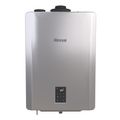
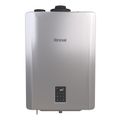

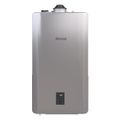


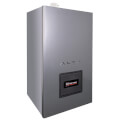



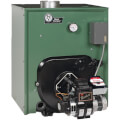

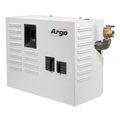
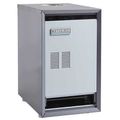


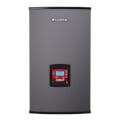
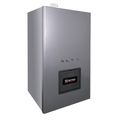

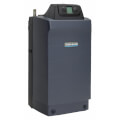


Boilers are heating appliances that use hot water or steam to distribute heat through a building, commonly paired with radiators, baseboard units, or radiant floor systems instead of forced-air ductwork. Residential and light commercial buildings use boilers fueled by natural gas, propane, oil, or electricity, with gas being the most common fuel type in new installations. Because a boiler heats water rather than air, hydronic heating systems tend to deliver more even, consistent warmth than forced-air systems and typically run quieter, since there's no blower moving air through ductwork. Boiler sizing depends on the building's heat loss calculation rather than square footage alone, so an oversized or undersized unit can lead to short-cycling or inadequate heat output. Contractors replacing an existing boiler need to account for both the heating system's design and any domestic hot water production the boiler handles through an indirect tank.
Subcategories
- Residential Gas Boilers: Residential gas boilers burn natural gas or propane to heat water for distribution through radiators, baseboard heat, or radiant floor tubing. Most new residential installations use gas boilers because of fuel availability and lower operating costs compared to oil or electric models. Venting requirements vary by efficiency rating, with high-efficiency condensing models using PVC venting instead of a traditional metal flue.
- Oil Boilers: Oil boilers burn heating oil stored in an on-site tank, making them common in areas without natural gas service. Contractors servicing oil boilers need to account for periodic burner maintenance and fuel filter changes that gas boilers don't require. Replacement oil boilers are often sized to match the existing tank and delivery setup already in place at the property.
- Combination Boilers: Combination boilers provide both space heating and domestic hot water from a single unit, eliminating the need for a separate water heater or storage tank. They're a common choice in homes with limited mechanical room space, since one appliance replaces two. Hot water output is generated on demand rather than stored, so sizing depends on the home's peak simultaneous hot water and heating demand.
- Steam Boilers: Steam boilers heat water to the point of producing steam, which travels through piping to radiators without a circulator pump, relying on pressure differences to move through the system. They're most common in older homes and buildings originally built with steam radiator systems already in place. Replacing a steam boiler generally means matching the new unit to the existing radiator system's piping and venting rather than converting to hydronic heat.
- Electric Boilers: Electric boilers heat water using electric resistance elements instead of burning fuel, removing the need for venting or a fuel supply line entirely. Contractors install them in homes without gas service, in smaller heating applications, or as a supplement to another heat source. Electrical service capacity is a key factor in sizing, since larger electric boilers draw significant amperage.
Buying Guide
Selecting a replacement boiler starts with an accurate heat loss calculation for the building rather than sizing to match the old unit's output or the building's square footage alone. An oversized boiler short-cycles, wearing out components faster and running less efficiently, while an undersized unit struggles to keep up on the coldest days of the year.
Fuel availability at the property usually narrows the decision first: homes with existing gas service typically stay with gas boilers, while properties without gas access choose oil or electric models. For homes that also need domestic hot water, a combination boiler or a boiler paired with an indirect water heater tank are both common approaches, and the choice often comes down to available mechanical room space and expected hot water demand.
Venting is another factor that affects both cost and placement: high-efficiency condensing boilers vent through PVC piping and can often be located with more flexibility than standard-efficiency units that need a traditional metal flue. Boilers being installed as a like-for-like replacement in an older building with steam or gravity hot water piping need to match the existing system's design rather than assuming a modern hydronic layout will work without changes to the distribution piping.
Frequently Asked Questions
What's the difference between a boiler and a furnace?
A boiler heats water or produces steam and distributes heat through radiators, baseboard units, or radiant floor tubing, while a furnace heats air and distributes it through ductwork. Hydronic heat from a boiler tends to run quieter and provide more even warmth than forced air. The choice between the two is usually determined by the existing distribution system already in the building rather than personal preference alone.
How is a boiler properly sized for a home?
Boiler sizing is based on a heat loss calculation that accounts for the building's insulation, window area, and square footage, not square footage alone. An oversized boiler short-cycles and wastes fuel, while an undersized one can't keep up with heating demand in cold weather. A proper heat loss calculation should be done before selecting a replacement rather than matching the old unit's rated output.
Can a combination boiler handle a home's entire hot water demand?
A combination boiler can supply domestic hot water on demand as long as the unit is sized for the home's peak simultaneous usage across multiple fixtures. Homes with high simultaneous hot water demand, like several bathrooms running at once, may need a larger combi unit or a separate storage tank instead. Reviewing typical usage patterns helps determine whether a combi boiler fits the household's needs.
Do steam boilers need to be replaced with another steam boiler?
Converting from steam to hydronic hot water heat usually means reworking the existing radiator and piping system, which adds significant cost and labor to the job. Most steam boiler replacements stay with steam to match the radiators and piping already installed. Converting systems is typically only worthwhile during a larger renovation that already involves reworking the heating distribution.
What maintenance do oil boilers need that gas boilers don't?
Oil boilers need periodic burner nozzle and fuel filter service to keep combustion running efficiently, along with regular fuel tank inspections that gas systems don't require. Soot buildup in the heat exchanger is also more common with oil and typically needs periodic cleaning. Gas boilers still need annual service, but skip the fuel-related maintenance oil systems require.
