



Filters
SORT
Product Availability –
Brand –
Air Flow Capacity (CFM) –
Weight (lbs) –
Review Score –
 --%3E %3Csvg version='1.1' id='Fill' xmlns='http://www.w3.org/2000/svg' xmlns:xlink='http://www.w3.org/1999/xlink' x='0px' y='0px' viewBox='0 0 100 100' enable-background='new 0 0 100 100' xml:space='preserve'%3E %3Cpath fill='%23F15C02' d='M79.44,0.95H20.56C9.78,0.95,0.95,9.78,0.95,20.56v58.87c0,10.79,8.82,19.61,19.61,19.61h58.87 c10.79,0,19.61-8.83,19.61-19.61V20.56C99.05,9.78,90.22,0.95,79.44,0.95z M65.38,58.24l9.38,29.58L49.69,69.78L24.5,87.82 l9.34-29.6L8.8,39.6l30.73-0.17c0,0,6.98-19.61,10-28.93c0.54,1.36,9.88,29.1,9.88,29.1H91.2L65.38,58.24z'/%3E %3C/svg%3E)
 --%3E %3Csvg version='1.1' id='With-RB' xmlns='http://www.w3.org/2000/svg' xmlns:xlink='http://www.w3.org/1999/xlink' x='0px' y='0px' viewBox='0 0 100 100' enable-background='new 0 0 100 100' xml:space='preserve'%3E %3Cpath fill='%23FBC8B4' d='M79.44,0.95H20.56C9.78,0.95,0.95,9.78,0.95,20.56v58.87c0,10.79,8.82,19.61,19.61,19.61h58.87 c10.79,0,19.61-8.83,19.61-19.61V20.56C99.05,9.78,90.22,0.95,79.44,0.95z M65.38,58.24l9.38,29.58L49.69,69.78L24.5,87.82 l9.34-29.6L8.8,39.6l30.73-0.17c0,0,6.98-19.61,10-28.93c0.54,1.36,9.88,29.1,9.88,29.1H91.2L65.38,58.24z'/%3E %3C/svg%3E)
Price Range –
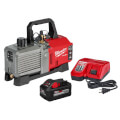
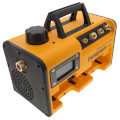
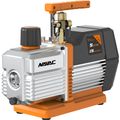
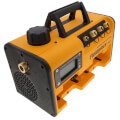
Vacuum Pumps



 --%3E %3Csvg version='1.1' id='No-RB' xmlns='http://www.w3.org/2000/svg' xmlns:xlink='http://www.w3.org/1999/xlink' x='0px' y='0px' viewBox='0 0 100 100' enable-background='new 0 0 100 100' xml:space='preserve'%3E %3Cpath fill='%23CECECE' d='M79.44,0.95H20.56C9.78,0.95,0.95,9.78,0.95,20.56v58.87c0,10.79,8.82,19.61,19.61,19.61h58.87 c10.79,0,19.61-8.83,19.61-19.61V20.56C99.05,9.78,90.22,0.95,79.44,0.95z M65.38,58.24l9.38,29.58L49.69,69.78L24.5,87.82 l9.34-29.6L8.8,39.6l30.73-0.17c0,0,6.98-19.61,10-28.93c0.54,1.36,9.88,29.1,9.88,29.1H91.2L65.38,58.24z'/%3E %3C/svg%3E)
 --%3E %3Csvg version='1.1' id='Half' xmlns='http://www.w3.org/2000/svg' xmlns:xlink='http://www.w3.org/1999/xlink' x='0px' y='0px' viewBox='0 0 100 100' enable-background='new 0 0 100 100' xml:space='preserve'%3E %3Cg%3E %3Cpath fill='%23F15C02' d='M30.05,70.23l3.79-12.01L8.8,39.6l30.73-0.17c0,0,6.98-19.61,10-28.93c0.54,1.36,9.88,29.1,9.88,29.1h1.58 L93.71,7.18c-3.58-3.82-8.66-6.23-14.28-6.23H20.56C9.78,0.95,0.95,9.78,0.95,20.56v58.87c0,5.41,2.22,10.32,5.79,13.88 L30.05,70.23z'/%3E %3C/g%3E %3Cpath fill='%23FBC8B4' d='M93.71,7.18L60.98,39.6H91.2L65.38,58.24l9.38,29.58L49.69,69.78L24.5,87.82l5.55-17.59L6.75,93.32 c3.55,3.54,8.44,5.73,13.82,5.73h58.87c10.79,0,19.61-8.83,19.61-19.61V20.56C99.05,15.4,97.01,10.69,93.71,7.18z'/%3E %3C/svg%3E)
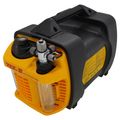
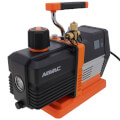
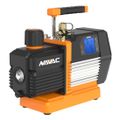
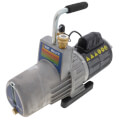
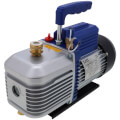
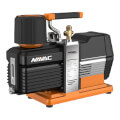
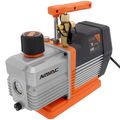
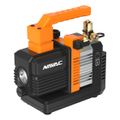
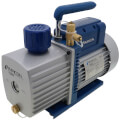
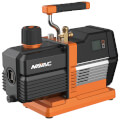
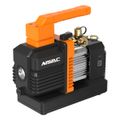
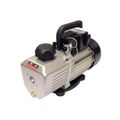
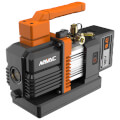
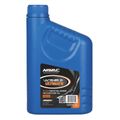
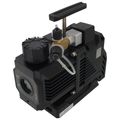
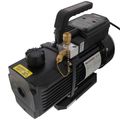
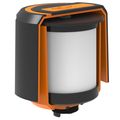
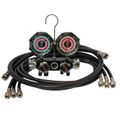
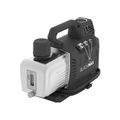
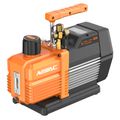
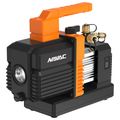
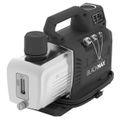
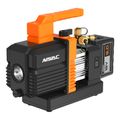
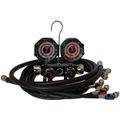

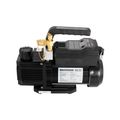
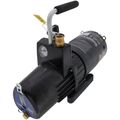
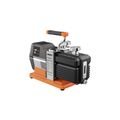
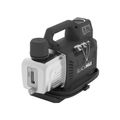
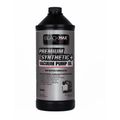
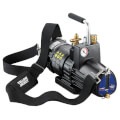
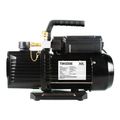

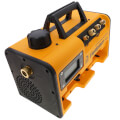
Vacuum pumps remove air and moisture from refrigerant lines and components before a new HVAC or refrigeration system is charged, which is a required step for proper system operation and long-term reliability. Technicians pull a system down to a deep vacuum to eliminate non-condensable gases and moisture that would otherwise contaminate the refrigerant and cause corrosion or reduced efficiency once the system is running. This category covers pumps sized for residential split systems up to larger commercial and industrial refrigeration jobs, with pump capacity typically measured by how much air volume it can move per minute. Contractors choose a pump size based on the typical line set lengths and equipment volumes they service most often, since an undersized pump takes longer to reach target vacuum levels on larger systems. Routine maintenance, including regular oil changes, keeps a vacuum pump performing at its rated capacity over its service life. This category serves HVAC and refrigeration technicians performing new installations, system evacuations, and leak repairs.
Subcategories
- Single-Stage Pumps: Single-stage pumps handle most routine residential evacuation work where deep vacuum levels aren't strictly required. They're generally lighter and less expensive than two-stage models, making them a common choice for technicians doing frequent, smaller jobs. Oil changes are still necessary to maintain proper vacuum performance over time.
- Two-Stage Pumps: Two-stage pumps pull a deeper vacuum than single-stage models, which matters on larger commercial systems or when a longer line set needs more thorough moisture removal. The second stage helps the pump reach and hold lower vacuum levels more efficiently. Technicians working larger installations typically prefer two-stage pumps for the additional margin they provide.
- Vacuum Pump Oil and Accessories: Vacuum pump oil and accessories keep a pump running at its rated capacity, since contaminated or degraded oil is one of the most common reasons a pump fails to reach target vacuum. Manifold gauge sets and hoses rated for vacuum service round out the accessories needed for a complete evacuation setup. Routine oil changes after moisture-heavy jobs extend pump life.
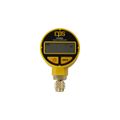
- Micron Gauges: Micron gauges measure vacuum depth precisely, well beyond what a standard refrigeration gauge can display. Using one confirms a system has actually reached the target vacuum level rather than relying on time alone as a proxy. Many technicians consider a micron gauge essential for verifying a proper evacuation before charging a system.
Buying Guide
Choosing the right pump starts with the type of work being done most often. Technicians handling mostly residential split systems can typically get by with a single-stage pump, while those regularly servicing commercial equipment or longer line sets benefit from the deeper vacuum a two-stage pump provides.
Vacuum Pumps are rated by their air displacement, usually expressed in cubic feet per minute, and matching that rating to typical job size affects how long an evacuation takes. A pump that's too small for the work will still get the job done, but it extends time on-site, which adds up across a busy schedule.
Beyond pump size, consider what else is needed for a complete evacuation setup. A micron gauge lets a technician confirm the system has actually reached target vacuum rather than guessing based on elapsed time, and vacuum-rated hoses reduce leaks at the connections that can slow down the process or produce inaccurate readings.
Maintenance also factors into total cost of ownership. Pumps that see frequent use on wet or contaminated systems need more frequent oil changes to keep performing at their rated capacity, so having spare oil on hand as part of a standard service kit avoids a mid-job slowdown. A well-maintained pump holds its vacuum rating far longer than one running on old, saturated oil.
Frequently Asked Questions
What's the difference between a single-stage and two-stage vacuum pump?
A two-stage pump pulls a deeper vacuum and generally reaches that level faster than a single-stage model, which matters most on larger systems or longer line sets. For routine residential work, a single-stage pump is usually sufficient.
How do I know when a system has reached proper vacuum?
A micron gauge gives a precise reading of vacuum depth, which is the most reliable way to confirm a system is ready to charge. Relying on time alone can leave moisture or air in the system even after running the pump for a while.
How often should vacuum pump oil be changed?
It depends on how wet or contaminated the systems being evacuated are. Pumps used on systems with significant moisture contamination need more frequent oil changes to maintain their rated vacuum performance.
Can a vacuum pump be too small for a job?
Yes. An undersized pump will still reach vacuum eventually, but it takes considerably longer on larger systems or longer line sets, which can slow down a job that's on a tight schedule.
Do I need a micron gauge if my pump already has a built-in gauge?
A pump's built-in gauge typically isn't precise enough to confirm a proper deep vacuum. A dedicated micron gauge gives a more accurate reading and is considered standard practice for verifying evacuation before charging a system.
