




Filters
SORT
Product Availability –
Brand –
Product Type –
Type –
Power Source –
Battery Type –
Batteries Included –
Length (Inches) –
Reach –
Review Score –
 --%3E %3Csvg version='1.1' id='Fill' xmlns='http://www.w3.org/2000/svg' xmlns:xlink='http://www.w3.org/1999/xlink' x='0px' y='0px' viewBox='0 0 100 100' enable-background='new 0 0 100 100' xml:space='preserve'%3E %3Cpath fill='%23F15C02' d='M79.44,0.95H20.56C9.78,0.95,0.95,9.78,0.95,20.56v58.87c0,10.79,8.82,19.61,19.61,19.61h58.87 c10.79,0,19.61-8.83,19.61-19.61V20.56C99.05,9.78,90.22,0.95,79.44,0.95z M65.38,58.24l9.38,29.58L49.69,69.78L24.5,87.82 l9.34-29.6L8.8,39.6l30.73-0.17c0,0,6.98-19.61,10-28.93c0.54,1.36,9.88,29.1,9.88,29.1H91.2L65.38,58.24z'/%3E %3C/svg%3E)
 --%3E %3Csvg version='1.1' id='With-RB' xmlns='http://www.w3.org/2000/svg' xmlns:xlink='http://www.w3.org/1999/xlink' x='0px' y='0px' viewBox='0 0 100 100' enable-background='new 0 0 100 100' xml:space='preserve'%3E %3Cpath fill='%23FBC8B4' d='M79.44,0.95H20.56C9.78,0.95,0.95,9.78,0.95,20.56v58.87c0,10.79,8.82,19.61,19.61,19.61h58.87 c10.79,0,19.61-8.83,19.61-19.61V20.56C99.05,9.78,90.22,0.95,79.44,0.95z M65.38,58.24l9.38,29.58L49.69,69.78L24.5,87.82 l9.34-29.6L8.8,39.6l30.73-0.17c0,0,6.98-19.61,10-28.93c0.54,1.36,9.88,29.1,9.88,29.1H91.2L65.38,58.24z'/%3E %3C/svg%3E)
Price Range –
Levels & Lasers

 --%3E %3Csvg version='1.1' id='No-RB' xmlns='http://www.w3.org/2000/svg' xmlns:xlink='http://www.w3.org/1999/xlink' x='0px' y='0px' viewBox='0 0 100 100' enable-background='new 0 0 100 100' xml:space='preserve'%3E %3Cpath fill='%23CECECE' d='M79.44,0.95H20.56C9.78,0.95,0.95,9.78,0.95,20.56v58.87c0,10.79,8.82,19.61,19.61,19.61h58.87 c10.79,0,19.61-8.83,19.61-19.61V20.56C99.05,9.78,90.22,0.95,79.44,0.95z M65.38,58.24l9.38,29.58L49.69,69.78L24.5,87.82 l9.34-29.6L8.8,39.6l30.73-0.17c0,0,6.98-19.61,10-28.93c0.54,1.36,9.88,29.1,9.88,29.1H91.2L65.38,58.24z'/%3E %3C/svg%3E)

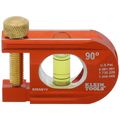
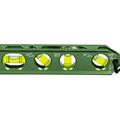
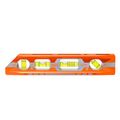
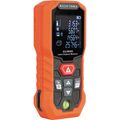
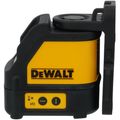
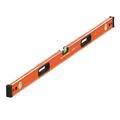
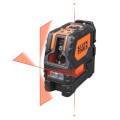
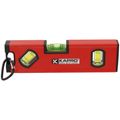
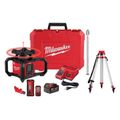
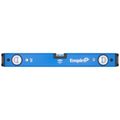
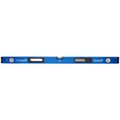

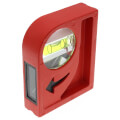
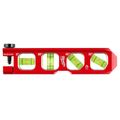
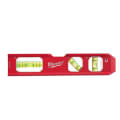
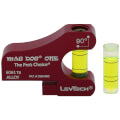
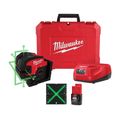
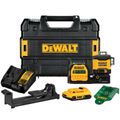

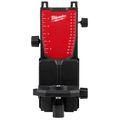
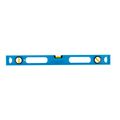
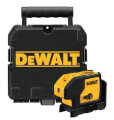
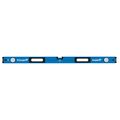
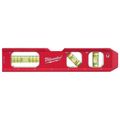
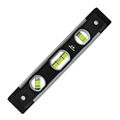
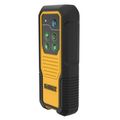
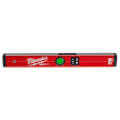
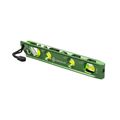

Levels & Lasers cover the tools contractors use to establish level, plumb, and grade references across a job site, from simple bubble levels to self-leveling laser systems. Rotary laser levels using electronic self-leveling can achieve accuracy as tight as 1/16 inch per 100 feet, with a working range up to 2,000 feet in diameter when paired with a laser detector. Builders, plumbers, and concrete contractors rely on these tools for tasks ranging from setting drain slope to establishing ceiling grid height across a large room. Choosing the right leveling method and accuracy rating up front keeps layout work accurate and avoids costly rework later in a project.
Subcategories
- Rotary Laser Levels: Rotary laser levels project a 360-degree beam around a room or job site on a horizontal or vertical plane. Contractors use them for large-area layout work like ceiling grids, foundation work, and site grading, often pairing the laser with a detector for outdoor use. Electronic self-leveling models offer the tightest accuracy, reaching about 1/16 inch per 100 feet.
- Line Lasers: Line lasers project one or more straight beam lines rather than a rotating point, making them useful for shorter-range indoor tasks like cabinet installation, tile layout, and shelving. Installers favor line lasers for their simplicity and lower cost compared to rotary units when the job doesn't require room-wide coverage. Most line lasers self-level automatically within a set range once activated.
- Laser Detectors: Laser detectors are handheld or rod-mounted receivers that pick up a laser beam in bright outdoor conditions where the beam isn't visible to the eye. Contractors doing site grading or exterior layout use detectors alongside a rotary laser to extend usable range up to 2,000 feet in diameter. Detector sensitivity and range should match the laser system it's paired with.
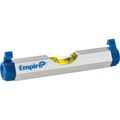
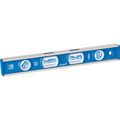
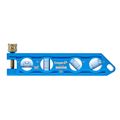
- Bubble & Torpedo Levels: Bubble and torpedo levels are non-powered tools that use a liquid-filled vial to indicate level or plumb without batteries or calibration. Plumbers and installers keep these on hand for quick checks on pipe runs, fixtures, and short layout tasks where setting up a laser isn't practical. Torpedo levels are a compact version built to fit into tight spaces.
Buying Guide
Start by matching the tool to the scale of the layout task. A bubble or torpedo level handles quick, small-scale checks like confirming a pipe run or fixture is level, while a laser level makes sense for larger areas like ceiling grids, room-wide layout, or site grading where a manual level can't efficiently cover the distance.
For laser levels, check the self-leveling method. Electronic self-leveling systems use small servo motors and deliver the tightest accuracy, commonly around 1/16 inch per 100 feet, and will often shut down automatically if bumped to prevent an inaccurate reading. Pendulum-based self-leveling is a simpler, less expensive alternative that still self-levels but typically with slightly less precision.
Consider beam type next. Rotary laser levels project a full 360-degree beam suited to room-wide or site-wide layout, while line lasers project one or more straight lines better suited to shorter-range indoor tasks like cabinetry or tile work. Choosing the wrong beam type for the job can mean setting up multiple times to cover an area.
Finally, check working range and whether a detector is needed. Rotary lasers can reach up to 2,000 feet in diameter with a detector for outdoor use, but the beam alone often isn't visible at that distance in daylight without one. Confirming detector compatibility with the laser model avoids a mismatched setup on site.
Frequently Asked Questions
How accurate are self-leveling laser levels?
Electronic self-leveling laser levels can achieve accuracy as tight as 1/16 inch per 100 feet, making them suitable for precise layout work. Accuracy varies by leveling method, with manual and pendulum-based systems typically offering slightly less precision than electronic self-leveling.
What's the difference between a rotary laser level and a line laser?
A rotary laser level projects a full 360-degree beam around a space, making it suited for large-area or site-wide layout work. A line laser projects one or more straight beam lines and works well for shorter-range indoor tasks like cabinet or tile installation.
Do I need a laser detector to use a rotary laser level outdoors?
A laser detector is typically needed for outdoor use because the laser beam often isn't visible in daylight without one. Pairing a rotary laser with a detector extends usable range up to 2,000 feet in diameter.
What does self-leveling mean on a laser level?
Self-leveling means the tool automatically levels itself once activated, using either a pendulum mechanism or electronic servo motors, rather than requiring manual adjustment with bubble vials. Electronic self-leveling systems offer the highest accuracy and typically shut down automatically if the tool is bumped.
When should a torpedo level be used instead of a laser level?
A torpedo level works well for quick, small-scale checks like confirming a pipe run or fixture is level, especially in tight spaces where setting up a laser isn't practical. Laser levels make more sense for larger-scale layout tasks spanning a room or job site.
