




Filters
SORT
Product Availability –
Brand –
Shutoff Head (ft.) –
Horse Power –
Voltage –
Review Score –
 --%3E %3Csvg version='1.1' id='Fill' xmlns='http://www.w3.org/2000/svg' xmlns:xlink='http://www.w3.org/1999/xlink' x='0px' y='0px' viewBox='0 0 100 100' enable-background='new 0 0 100 100' xml:space='preserve'%3E %3Cpath fill='%23F15C02' d='M79.44,0.95H20.56C9.78,0.95,0.95,9.78,0.95,20.56v58.87c0,10.79,8.82,19.61,19.61,19.61h58.87 c10.79,0,19.61-8.83,19.61-19.61V20.56C99.05,9.78,90.22,0.95,79.44,0.95z M65.38,58.24l9.38,29.58L49.69,69.78L24.5,87.82 l9.34-29.6L8.8,39.6l30.73-0.17c0,0,6.98-19.61,10-28.93c0.54,1.36,9.88,29.1,9.88,29.1H91.2L65.38,58.24z'/%3E %3C/svg%3E)
 --%3E %3Csvg version='1.1' id='With-RB' xmlns='http://www.w3.org/2000/svg' xmlns:xlink='http://www.w3.org/1999/xlink' x='0px' y='0px' viewBox='0 0 100 100' enable-background='new 0 0 100 100' xml:space='preserve'%3E %3Cpath fill='%23FBC8B4' d='M79.44,0.95H20.56C9.78,0.95,0.95,9.78,0.95,20.56v58.87c0,10.79,8.82,19.61,19.61,19.61h58.87 c10.79,0,19.61-8.83,19.61-19.61V20.56C99.05,9.78,90.22,0.95,79.44,0.95z M65.38,58.24l9.38,29.58L49.69,69.78L24.5,87.82 l9.34-29.6L8.8,39.6l30.73-0.17c0,0,6.98-19.61,10-28.93c0.54,1.36,9.88,29.1,9.88,29.1H91.2L65.38,58.24z'/%3E %3C/svg%3E)
Price Range –
Shallow Well Pumps

 --%3E %3Csvg version='1.1' id='Half' xmlns='http://www.w3.org/2000/svg' xmlns:xlink='http://www.w3.org/1999/xlink' x='0px' y='0px' viewBox='0 0 100 100' enable-background='new 0 0 100 100' xml:space='preserve'%3E %3Cg%3E %3Cpath fill='%23F15C02' d='M30.05,70.23l3.79-12.01L8.8,39.6l30.73-0.17c0,0,6.98-19.61,10-28.93c0.54,1.36,9.88,29.1,9.88,29.1h1.58 L93.71,7.18c-3.58-3.82-8.66-6.23-14.28-6.23H20.56C9.78,0.95,0.95,9.78,0.95,20.56v58.87c0,5.41,2.22,10.32,5.79,13.88 L30.05,70.23z'/%3E %3C/g%3E %3Cpath fill='%23FBC8B4' d='M93.71,7.18L60.98,39.6H91.2L65.38,58.24l9.38,29.58L49.69,69.78L24.5,87.82l5.55-17.59L6.75,93.32 c3.55,3.54,8.44,5.73,13.82,5.73h58.87c10.79,0,19.61-8.83,19.61-19.61V20.56C99.05,15.4,97.01,10.69,93.71,7.18z'/%3E %3C/svg%3E)



 --%3E %3Csvg version='1.1' id='No-RB' xmlns='http://www.w3.org/2000/svg' xmlns:xlink='http://www.w3.org/1999/xlink' x='0px' y='0px' viewBox='0 0 100 100' enable-background='new 0 0 100 100' xml:space='preserve'%3E %3Cpath fill='%23CECECE' d='M79.44,0.95H20.56C9.78,0.95,0.95,9.78,0.95,20.56v58.87c0,10.79,8.82,19.61,19.61,19.61h58.87 c10.79,0,19.61-8.83,19.61-19.61V20.56C99.05,9.78,90.22,0.95,79.44,0.95z M65.38,58.24l9.38,29.58L49.69,69.78L24.5,87.82 l9.34-29.6L8.8,39.6l30.73-0.17c0,0,6.98-19.61,10-28.93c0.54,1.36,9.88,29.1,9.88,29.1H91.2L65.38,58.24z'/%3E %3C/svg%3E)
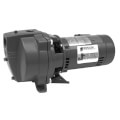
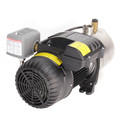
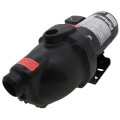

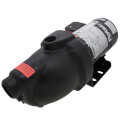


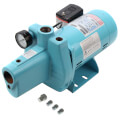
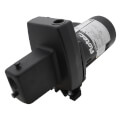
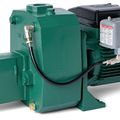


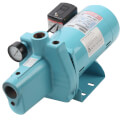
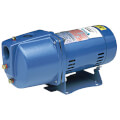

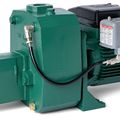


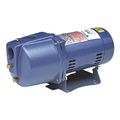


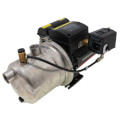
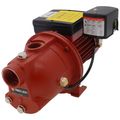
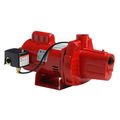
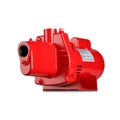
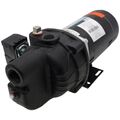
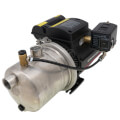
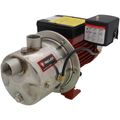
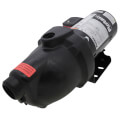
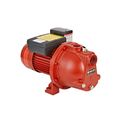
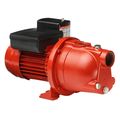
Shallow well pumps draw water from wells where the water table sits close enough to the surface that a single suction line from the pump down into the well can pull water without losing prime, typically wells no deeper than around 25 feet. The pump itself mounts above ground, often in a basement, utility room, or pump house, rather than submerged in the well like a deep well or submersible unit. A jet assembly built into or attached to the pump creates suction through a single pipe running down into the water source, then pushes that water into the home's pressure tank and distribution system. Homeowners on shallow wells, or those supplementing a rural water supply, rely on these pumps for consistent household pressure and flow. Because the pump sits above ground, servicing motor or seal issues doesn't require pulling equipment out of the well casing, which simplifies maintenance compared to submersible alternatives.
Subcategories
- Single-Stage Shallow Well Jet Pumps: Single-stage jet pumps handle straightforward shallow well applications where the pumping depth stays well within the pump's suction lift capability. They're the simplest and most common configuration for typical residential shallow wells. Contractors select single-stage units for wells with a stable, close-to-surface water table. Lower part count compared to multi-stage designs also means fewer components to service over the pump's life.
- Convertible Jet Pumps: Convertible pumps can run in shallow well mode with a single pipe or be reconfigured for deep well use with a separate jet assembly installed down in the well casing. This flexibility matters when well depth is uncertain at the time of purchase or when a property's water source might change. Contractors often stock convertible units to cover more well configurations from one product line. Switching modes typically involves swapping an ejector kit rather than replacing the entire pump.
- Shallow Well Pump Replacement Parts: Replacement parts include impellers, seals, jet assemblies, and pressure switches specific to shallow well pump models. Keeping common wear parts on hand speeds up repair calls for pumps that have lost prime or developed a seal leak. Matching replacement parts to the exact pump model and horsepower rating keeps performance consistent after a repair. Pressure switches in particular are a frequent replacement item since they cycle with every pump start and stop.
Buying Guide
Confirming well depth against the pump's suction lift capability is the starting point for any shallow well pump selection, since these pumps rely on atmospheric pressure to lift water through a single suction pipe and lose effectiveness as depth increases beyond their rated range. A well right at the edge of shallow well depth may perform better with a convertible unit that has more flexibility built in.
Horsepower and flow rate need to match the household's fixture count and simultaneous demand. An undersized pump struggles to maintain pressure when multiple fixtures run at once, while an oversized pump cycles more than necessary and can shorten component life over time. Shallow Well Pumps are typically rated by gallons per minute at a stated pressure, so comparing that rating against the home's actual usage pattern gives a more accurate size than horsepower alone.
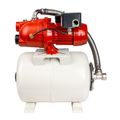
Pressure tank sizing works alongside the pump choice, since the tank determines how often the pump cycles on and off during normal household use. A properly matched tank reduces short-cycling, which extends motor and switch life. Checking that the pressure switch settings suit the specific pump and tank combination keeps the whole system working together rather than fighting itself.
Finally, considering where the pump will be installed, basement, pump house, or well pit, affects both noise exposure and freeze protection needs. A pump installed in an unheated or exposed location may need additional insulation or heat tape to prevent freezing during cold months, which is worth factoring into the total installation cost before finalizing a pump selection.
Frequently Asked Questions
How deep can a shallow well pump draw water from?
Shallow well pumps typically work for wells no deeper than around 25 feet, since they rely on atmospheric pressure through a single suction pipe rather than a submerged jet assembly. Wells deeper than that generally need a deep well or submersible pump instead.
What's the difference between a single-stage and convertible jet pump?
A single-stage pump is built specifically for shallow well use, while a convertible pump can be reconfigured with a different ejector kit to handle deep well applications as well. Convertible units offer more flexibility when well depth isn't fully known at purchase time.
Where should a shallow well pump be installed?
These pumps mount above ground in a basement, utility room, or pump house rather than being submerged in the well itself. This makes routine maintenance easier since the pump doesn't need to be pulled from the well casing.
How is pump size determined for a specific household?
Sizing depends on matching the pump's flow rate and pressure rating to the home's fixture count and expected simultaneous water demand. An undersized pump struggles under peak demand, while an oversized pump cycles more often than necessary.
Does a shallow well pump need a pressure tank to work properly?
Yes, the pressure tank works alongside the pump to reduce how often it cycles on and off, which extends the life of the motor and pressure switch. Matching tank size to the pump's output keeps the system running efficiently.
