




Filters
SORT
Product Availability –
Brand –
Length (Inches) –
Review Score –
 --%3E %3Csvg version='1.1' id='Fill' xmlns='http://www.w3.org/2000/svg' xmlns:xlink='http://www.w3.org/1999/xlink' x='0px' y='0px' viewBox='0 0 100 100' enable-background='new 0 0 100 100' xml:space='preserve'%3E %3Cpath fill='%23F15C02' d='M79.44,0.95H20.56C9.78,0.95,0.95,9.78,0.95,20.56v58.87c0,10.79,8.82,19.61,19.61,19.61h58.87 c10.79,0,19.61-8.83,19.61-19.61V20.56C99.05,9.78,90.22,0.95,79.44,0.95z M65.38,58.24l9.38,29.58L49.69,69.78L24.5,87.82 l9.34-29.6L8.8,39.6l30.73-0.17c0,0,6.98-19.61,10-28.93c0.54,1.36,9.88,29.1,9.88,29.1H91.2L65.38,58.24z'/%3E %3C/svg%3E)
 --%3E %3Csvg version='1.1' id='With-RB' xmlns='http://www.w3.org/2000/svg' xmlns:xlink='http://www.w3.org/1999/xlink' x='0px' y='0px' viewBox='0 0 100 100' enable-background='new 0 0 100 100' xml:space='preserve'%3E %3Cpath fill='%23FBC8B4' d='M79.44,0.95H20.56C9.78,0.95,0.95,9.78,0.95,20.56v58.87c0,10.79,8.82,19.61,19.61,19.61h58.87 c10.79,0,19.61-8.83,19.61-19.61V20.56C99.05,9.78,90.22,0.95,79.44,0.95z M65.38,58.24l9.38,29.58L49.69,69.78L24.5,87.82 l9.34-29.6L8.8,39.6l30.73-0.17c0,0,6.98-19.61,10-28.93c0.54,1.36,9.88,29.1,9.88,29.1H91.2L65.38,58.24z'/%3E %3C/svg%3E)
Price Range –
Water Pump Pliers (Tongue and Groove)


 --%3E %3Csvg version='1.1' id='No-RB' xmlns='http://www.w3.org/2000/svg' xmlns:xlink='http://www.w3.org/1999/xlink' x='0px' y='0px' viewBox='0 0 100 100' enable-background='new 0 0 100 100' xml:space='preserve'%3E %3Cpath fill='%23CECECE' d='M79.44,0.95H20.56C9.78,0.95,0.95,9.78,0.95,20.56v58.87c0,10.79,8.82,19.61,19.61,19.61h58.87 c10.79,0,19.61-8.83,19.61-19.61V20.56C99.05,9.78,90.22,0.95,79.44,0.95z M65.38,58.24l9.38,29.58L49.69,69.78L24.5,87.82 l9.34-29.6L8.8,39.6l30.73-0.17c0,0,6.98-19.61,10-28.93c0.54,1.36,9.88,29.1,9.88,29.1H91.2L65.38,58.24z'/%3E %3C/svg%3E)



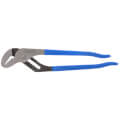

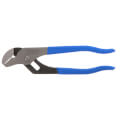
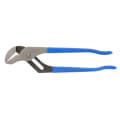


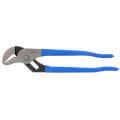


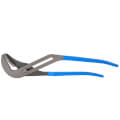
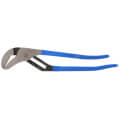


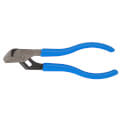


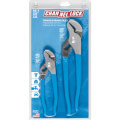


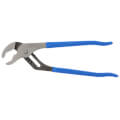

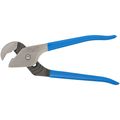

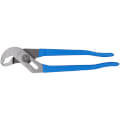

Water Pump Pliers (Tongue and Groove) are adjustable gripping tools built around an interlocking tongue-and-groove channel that lets the jaw open to multiple widths without losing tension on the workpiece. Plumbers and pipefitters rely on this style to turn pipe, fittings, and nuts of varying sizes with a single tool instead of swapping wrenches. Channellock's V-jaw models feature 90-degree laser-hardened teeth that bite in both directions, and the undercut channel design keeps the jaw from slipping under load. A PermaLock fastener replaces the traditional nut-and-bolt pivot, reducing joint wear over repeated use. Because the jaw capacity adjusts in steps along the channel, one plier can handle round stock, hex nuts, and irregular shapes that a fixed wrench cannot grip cleanly. For trade professionals working service calls or rough-in, a dependable pair of water pump pliers cuts down the number of tools carried on a truck and speeds up repetitive tightening and loosening tasks in tight spaces.
Subcategories
- Straight Jaw Tongue and Groove Pliers: Straight Jaw Tongue and Groove Pliers use flat, parallel jaw faces that sit square against pipe and fittings for a firm, even grip. Plumbers reach for this style on rough-in and repair calls where flat surfaces, like nuts or squared fittings, are more common than round stock. Channellock's original straight jaw design pairs an undercut tongue-and-groove channel with laser-hardened teeth to resist slipping under torque. The straight profile also makes it easier to see the workpiece while adjusting the jaw.
- V-Jaw Tongue and Groove Pliers: V-Jaw Tongue and Groove Pliers cut the jaw teeth at an angle so more points of contact wrap around round pipe and tubing. Pipefitters and HVAC technicians favor this shape when turning copper, PVC, or steel pipe that would slip in a flat-jawed tool. Channellock's 6.5-inch V-jaw model uses 90-degree laser-hardened teeth combined with an undercut tongue-and-groove channel to hold position on rounded stock. The angled jaw reduces marring on softer pipe materials compared to straight-jaw designs.
- GripLock Tongue and Groove Pliers: GripLock Tongue and Groove Pliers use an offset head and multiple adjustment notches to reach a wider jaw opening without switching tools. Channellock's GL10 model measures 9.5 inches overall and opens to a 1-1/4 inch jaw capacity across 5 adjustment positions. Service technicians use this style on larger fittings, unions, and shut-off valves where a compact plier would run out of range. A SAFE-T-STOP feature on the GL10 helps prevent pinched fingers when the jaw closes.
Buying Guide
Choosing the right tongue-and-groove pliers starts with the shape of what needs turning. Round pipe, tubing, and rounded nuts grip best in a V-jaw design, since the angled teeth wrap around curved surfaces and resist slipping under torque. Flat nuts, squared fittings, and general-purpose turning call for a straight jaw, which sits flush against parallel surfaces for a steady hold. Jaw capacity matters just as much as tooth shape. A compact pair in the 6 to 7 inch range covers small fittings and tight access points under sinks or behind fixtures, while a longer pair with a wider capacity, like the GripLock's 1-1/4 inch opening, reaches larger unions, drain nuts, and shut-off valves without switching tools mid-job. Somewhere in the middle of a rough-in kit, most technicians carry Water Pump Pliers (Tongue and Groove) in at least two sizes, a smaller pair for precision work and a larger pair for stubborn fittings. Adjustment mechanism is another factor: multi-position channels let the jaw step open in stages, and models like the GripLock use 5 fixed adjustment positions to shift between sizes quickly. Build quality also counts on a daily-use tool. Look for laser-hardened teeth that hold an edge through repeated torque, an undercut channel that resists lateral slip, and a solid pivot fastener that won't loosen with heavy use. Comfort grips reduce hand fatigue on long service days, which adds up over a full shift of turning fittings.
Frequently Asked Questions
What is the difference between straight jaw and V-jaw tongue and groove pliers?
Straight jaw tongue and groove pliers have flat, parallel teeth that grip square nuts and fittings evenly, while V-jaw models angle the teeth to wrap around round pipe and tubing. Technicians working mostly with rounded stock, like copper or PVC pipe, typically reach for a V-jaw pair, while those turning flat nuts or fittings prefer straight jaw pliers. Both styles use an undercut tongue-and-groove channel to resist slipping under load.
How many adjustment positions do tongue and groove pliers typically have?
Adjustment positions vary by model, with some designs offering 5 distinct jaw settings along the channel. Channellock's GripLock GL10, for example, opens across 5 positions to reach a 1-1/4 inch jaw capacity. More positions generally mean a wider range of fitting sizes covered by a single tool.
What jaw capacity is needed for plumbing service work?
Jaw capacity needed depends on the fittings encountered on a given job, but a range from small compact pliers up to a 1-1/4 inch opening covers most residential plumbing and HVAC service calls. Larger unions or valve bodies may call for a plier with a wider capacity, so many technicians carry more than one size on the truck.
Why does the jaw teeth pattern matter on tongue and groove pliers?
Teeth pattern affects how well the plier holds a fitting under torque without slipping. Laser-hardened teeth cut at 90 degrees grip in both directions, which keeps the jaw locked onto a fitting whether turning clockwise or counterclockwise. Undercut channels reinforce that hold by preventing the jaw from sliding sideways during use.
Are tongue and groove pliers the same as channel-lock pliers?
Tongue and groove pliers are commonly called channel-lock pliers on job sites, since Channellock is one of the most recognized manufacturers of this tool style. Both terms describe the same adjustable, interlocking jaw design used to grip pipe, nuts, and fittings of varying sizes.
