




Round Motor Run Capacitors

 --%3E %3Csvg version='1.1' id='Fill' xmlns='http://www.w3.org/2000/svg' xmlns:xlink='http://www.w3.org/1999/xlink' x='0px' y='0px' viewBox='0 0 100 100' enable-background='new 0 0 100 100' xml:space='preserve'%3E %3Cpath fill='%23F15C02' d='M79.44,0.95H20.56C9.78,0.95,0.95,9.78,0.95,20.56v58.87c0,10.79,8.82,19.61,19.61,19.61h58.87 c10.79,0,19.61-8.83,19.61-19.61V20.56C99.05,9.78,90.22,0.95,79.44,0.95z M65.38,58.24l9.38,29.58L49.69,69.78L24.5,87.82 l9.34-29.6L8.8,39.6l30.73-0.17c0,0,6.98-19.61,10-28.93c0.54,1.36,9.88,29.1,9.88,29.1H91.2L65.38,58.24z'/%3E %3C/svg%3E)

 --%3E %3Csvg version='1.1' id='Half' xmlns='http://www.w3.org/2000/svg' xmlns:xlink='http://www.w3.org/1999/xlink' x='0px' y='0px' viewBox='0 0 100 100' enable-background='new 0 0 100 100' xml:space='preserve'%3E %3Cg%3E %3Cpath fill='%23F15C02' d='M30.05,70.23l3.79-12.01L8.8,39.6l30.73-0.17c0,0,6.98-19.61,10-28.93c0.54,1.36,9.88,29.1,9.88,29.1h1.58 L93.71,7.18c-3.58-3.82-8.66-6.23-14.28-6.23H20.56C9.78,0.95,0.95,9.78,0.95,20.56v58.87c0,5.41,2.22,10.32,5.79,13.88 L30.05,70.23z'/%3E %3C/g%3E %3Cpath fill='%23FBC8B4' d='M93.71,7.18L60.98,39.6H91.2L65.38,58.24l9.38,29.58L49.69,69.78L24.5,87.82l5.55-17.59L6.75,93.32 c3.55,3.54,8.44,5.73,13.82,5.73h58.87c10.79,0,19.61-8.83,19.61-19.61V20.56C99.05,15.4,97.01,10.69,93.71,7.18z'/%3E %3C/svg%3E)


 --%3E %3Csvg version='1.1' id='No-RB' xmlns='http://www.w3.org/2000/svg' xmlns:xlink='http://www.w3.org/1999/xlink' x='0px' y='0px' viewBox='0 0 100 100' enable-background='new 0 0 100 100' xml:space='preserve'%3E %3Cpath fill='%23CECECE' d='M79.44,0.95H20.56C9.78,0.95,0.95,9.78,0.95,20.56v58.87c0,10.79,8.82,19.61,19.61,19.61h58.87 c10.79,0,19.61-8.83,19.61-19.61V20.56C99.05,9.78,90.22,0.95,79.44,0.95z M65.38,58.24l9.38,29.58L49.69,69.78L24.5,87.82 l9.34-29.6L8.8,39.6l30.73-0.17c0,0,6.98-19.61,10-28.93c0.54,1.36,9.88,29.1,9.88,29.1H91.2L65.38,58.24z'/%3E %3C/svg%3E)

 --%3E %3Csvg version='1.1' id='With-RB' xmlns='http://www.w3.org/2000/svg' xmlns:xlink='http://www.w3.org/1999/xlink' x='0px' y='0px' viewBox='0 0 100 100' enable-background='new 0 0 100 100' xml:space='preserve'%3E %3Cpath fill='%23FBC8B4' d='M79.44,0.95H20.56C9.78,0.95,0.95,9.78,0.95,20.56v58.87c0,10.79,8.82,19.61,19.61,19.61h58.87 c10.79,0,19.61-8.83,19.61-19.61V20.56C99.05,9.78,90.22,0.95,79.44,0.95z M65.38,58.24l9.38,29.58L49.69,69.78L24.5,87.82 l9.34-29.6L8.8,39.6l30.73-0.17c0,0,6.98-19.61,10-28.93c0.54,1.36,9.88,29.1,9.88,29.1H91.2L65.38,58.24z'/%3E %3C/svg%3E)
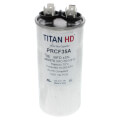
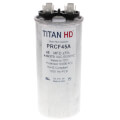
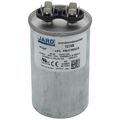
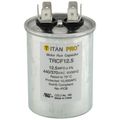
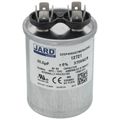
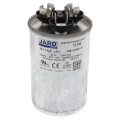
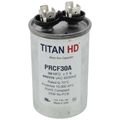
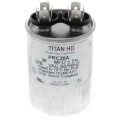
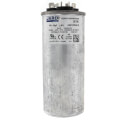
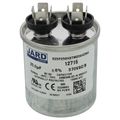

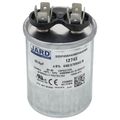
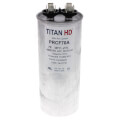
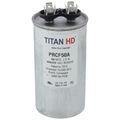
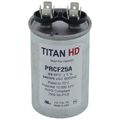
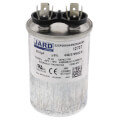
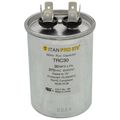
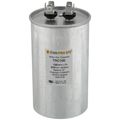
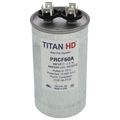
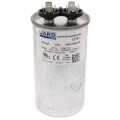
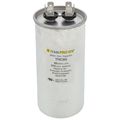
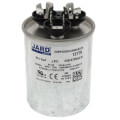
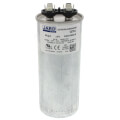

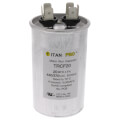
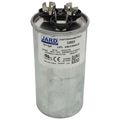
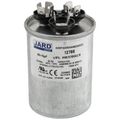
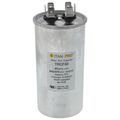
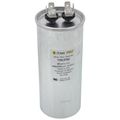
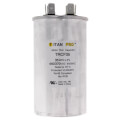
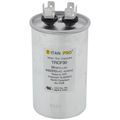
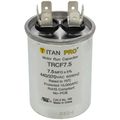
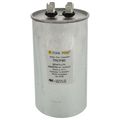
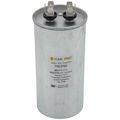
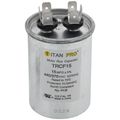
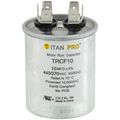
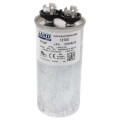
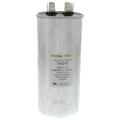
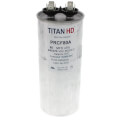
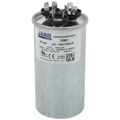
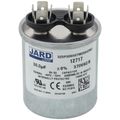
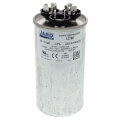
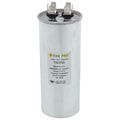
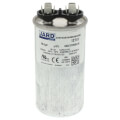
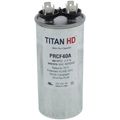
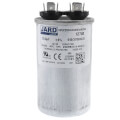
Round Motor Run Capacitors are cylindrical capacitors used to keep single-phase HVAC motors, such as condenser fan motors and blower motors, running efficiently after startup. An HVAC technician typically replaces one of these when a system's outdoor fan has stalled, is running slower than normal, or a multimeter reading shows the capacitor's microfarad rating has drifted well below its labeled value. Unlike start capacitors, which only engage briefly to help a motor overcome initial torque, run capacitors stay in the circuit the entire time the motor operates, so a weak or failing one shows up as reduced fan speed, higher amp draw, or a motor that hums but won't spin. The round case style is common on compact single-motor applications where space inside the unit's electrical compartment is limited. Replacing a failing run capacitor with one matched in microfarad rating and voltage to the original keeps the motor running at its intended speed and reduces strain on the motor windings.
Subcategories
- Single-Value Run Capacitors: Single-value run capacitors power one motor circuit, such as a condenser fan or a blower motor running on its own. A technician matches the microfarad rating and voltage on the failed capacitor's label to the replacement before swapping it in. Getting the microfarad value wrong, even by a small margin, can shorten the life of the new capacitor or leave the motor underpowered.
- Dual-Run Capacitors: Dual-run capacitors combine two separate capacitance values in one case to serve both the compressor and the condenser fan motor from a single component. Dual-run units are common on packaged and split-system condensing units where panel space is limited and running two separate capacitors isn't practical. Both capacitance values need to match the equipment's original specification, since replacing only the failing side of a dual-run capacitor isn't an option.
- High-Temperature Rated Capacitors: High-temperature rated capacitors are built to hold their rated capacitance in condensing units and rooftop equipment that run hotter than typical indoor air handlers. Technicians reach for this subcategory when the failed capacitor was mounted close to the compressor or in a poorly ventilated electrical compartment. Choosing a capacitor rated for the equipment's actual operating temperature helps it hold its capacitance value longer than a standard-temperature part in the same location.
Buying Guide
Ordering Round Motor Run Capacitors starts with reading the label on the failed capacitor, which lists the microfarad rating, voltage rating, and whether it's a single-value or dual-run unit. Matching both numbers to the replacement is non-negotiable. A capacitor with too low a microfarad rating won't deliver enough starting torque to the motor, while one rated too high can run the motor hot and shorten its life. Voltage rating should meet or exceed the original spec; a 370V capacitor can typically substitute for a 370V or lower-rated original, but going the other direction isn't recommended. For dual-run capacitors, confirm both capacitance values, commonly written as two numbers such as 45/5 MFD, along with which terminal serves the compressor versus the fan motor, since a mislabeled terminal can send the wrong capacitance to each motor. Case size matters too. A round capacitor that doesn't physically fit the mounting bracket in the electrical compartment adds an unnecessary extra trip back to the truck. Techs working service routes across multiple equipment brands often stock the handful of MFD and voltage combinations that cover most calls, since single-value run capacitors are largely interchangeable across manufacturers as long as the electrical ratings match. When a nameplate is faded or missing, checking the equipment manufacturer's parts documentation for the original capacitor specification is more reliable than estimating from the motor's horsepower alone.
Frequently Asked Questions
How do I know if a run capacitor is actually the problem?
A multimeter capacitance reading that's significantly below the rated microfarad value stamped on the capacitor is the clearest sign it has failed. A motor that hums, runs slowly, or won't start at all while drawing higher than normal amperage also points to a weak run capacitor.
Can I use a higher microfarad capacitor than the original?
No, the microfarad rating should match the original as closely as possible. A capacitor rated too high can cause the motor to run hotter and draw more current than it's designed for.
What's the difference between a run capacitor and a start capacitor?
A run capacitor stays in the circuit for as long as the motor operates, while a start capacitor only engages for a moment during startup and then drops out of the circuit. Round motor run capacitors are built for continuous duty, which is why their construction differs from a start capacitor's.
Is it safe to substitute a single capacitor for a dual-run capacitor?
It's possible to wire two single-value capacitors in place of one dual-run unit if panel space allows, but the replacement needs to match both original capacitance values exactly. Confirming terminal wiring carefully during the swap avoids sending the wrong capacitance to the compressor or fan motor.
Why do some run capacitors fail faster than others in the same location?
Capacitors mounted in hotter parts of the equipment, like near a compressor or in a poorly ventilated compartment, tend to lose capacitance faster over time. Using a capacitor rated for higher operating temperatures in those spots typically extends its service life.
