



Filters
SORT
Product Availability –
Brand –
Product Type –
Review Score –
 --%3E %3Csvg version='1.1' id='Fill' xmlns='http://www.w3.org/2000/svg' xmlns:xlink='http://www.w3.org/1999/xlink' x='0px' y='0px' viewBox='0 0 100 100' enable-background='new 0 0 100 100' xml:space='preserve'%3E %3Cpath fill='%23F15C02' d='M79.44,0.95H20.56C9.78,0.95,0.95,9.78,0.95,20.56v58.87c0,10.79,8.82,19.61,19.61,19.61h58.87 c10.79,0,19.61-8.83,19.61-19.61V20.56C99.05,9.78,90.22,0.95,79.44,0.95z M65.38,58.24l9.38,29.58L49.69,69.78L24.5,87.82 l9.34-29.6L8.8,39.6l30.73-0.17c0,0,6.98-19.61,10-28.93c0.54,1.36,9.88,29.1,9.88,29.1H91.2L65.38,58.24z'/%3E %3C/svg%3E)
 --%3E %3Csvg version='1.1' id='With-RB' xmlns='http://www.w3.org/2000/svg' xmlns:xlink='http://www.w3.org/1999/xlink' x='0px' y='0px' viewBox='0 0 100 100' enable-background='new 0 0 100 100' xml:space='preserve'%3E %3Cpath fill='%23FBC8B4' d='M79.44,0.95H20.56C9.78,0.95,0.95,9.78,0.95,20.56v58.87c0,10.79,8.82,19.61,19.61,19.61h58.87 c10.79,0,19.61-8.83,19.61-19.61V20.56C99.05,9.78,90.22,0.95,79.44,0.95z M65.38,58.24l9.38,29.58L49.69,69.78L24.5,87.82 l9.34-29.6L8.8,39.6l30.73-0.17c0,0,6.98-19.61,10-28.93c0.54,1.36,9.88,29.1,9.88,29.1H91.2L65.38,58.24z'/%3E %3C/svg%3E)
Price Range –
Clamp Meters


 --%3E %3Csvg version='1.1' id='Half' xmlns='http://www.w3.org/2000/svg' xmlns:xlink='http://www.w3.org/1999/xlink' x='0px' y='0px' viewBox='0 0 100 100' enable-background='new 0 0 100 100' xml:space='preserve'%3E %3Cg%3E %3Cpath fill='%23F15C02' d='M30.05,70.23l3.79-12.01L8.8,39.6l30.73-0.17c0,0,6.98-19.61,10-28.93c0.54,1.36,9.88,29.1,9.88,29.1h1.58 L93.71,7.18c-3.58-3.82-8.66-6.23-14.28-6.23H20.56C9.78,0.95,0.95,9.78,0.95,20.56v58.87c0,5.41,2.22,10.32,5.79,13.88 L30.05,70.23z'/%3E %3C/g%3E %3Cpath fill='%23FBC8B4' d='M93.71,7.18L60.98,39.6H91.2L65.38,58.24l9.38,29.58L49.69,69.78L24.5,87.82l5.55-17.59L6.75,93.32 c3.55,3.54,8.44,5.73,13.82,5.73h58.87c10.79,0,19.61-8.83,19.61-19.61V20.56C99.05,15.4,97.01,10.69,93.71,7.18z'/%3E %3C/svg%3E)



 --%3E %3Csvg version='1.1' id='No-RB' xmlns='http://www.w3.org/2000/svg' xmlns:xlink='http://www.w3.org/1999/xlink' x='0px' y='0px' viewBox='0 0 100 100' enable-background='new 0 0 100 100' xml:space='preserve'%3E %3Cpath fill='%23CECECE' d='M79.44,0.95H20.56C9.78,0.95,0.95,9.78,0.95,20.56v58.87c0,10.79,8.82,19.61,19.61,19.61h58.87 c10.79,0,19.61-8.83,19.61-19.61V20.56C99.05,9.78,90.22,0.95,79.44,0.95z M65.38,58.24l9.38,29.58L49.69,69.78L24.5,87.82 l9.34-29.6L8.8,39.6l30.73-0.17c0,0,6.98-19.61,10-28.93c0.54,1.36,9.88,29.1,9.88,29.1H91.2L65.38,58.24z'/%3E %3C/svg%3E)
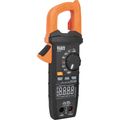
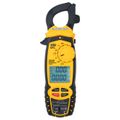
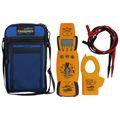
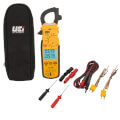

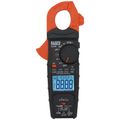
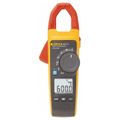
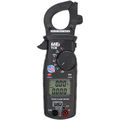
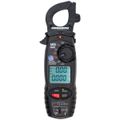
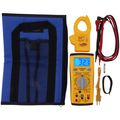
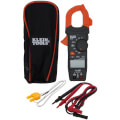
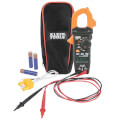
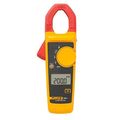
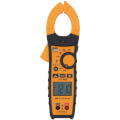
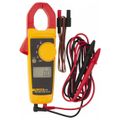
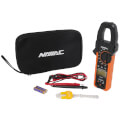
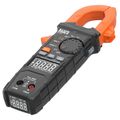
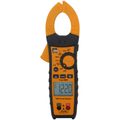
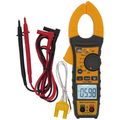
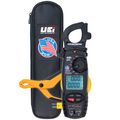
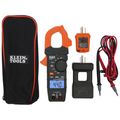
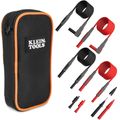
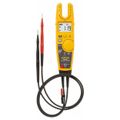
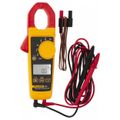


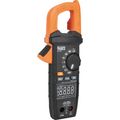
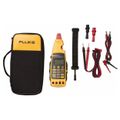
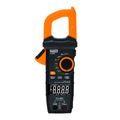

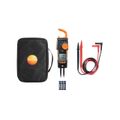
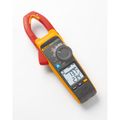
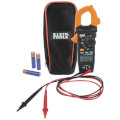

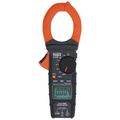
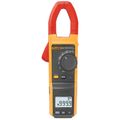
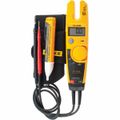
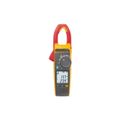
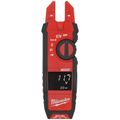
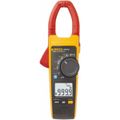

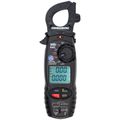
Clamp Meters are electrical testers that measure AC current by clamping around a conductor, then read voltage and other values with test leads. The Ideal Clamp-Pro covers a 600 amp AC current range and carries a CAT III 600V rating. Fieldpiece models such as the SC640 and SC440 offer True RMS readings, a 5000 count dual display, and K-type temperature input for HVAC/R work. Milwaukee fork meters, including the 2205-20 and 2206-20, offer a 200 amp current range with a wide 0.63 inch fork opening. Electricians and HVAC technicians use clamp style meters to check current draw, confirm voltage, and troubleshoot equipment on service calls. Each model brings different strengths, so the specs on each listing deserve a close read. Picking a suitable current range, safety rating, and feature set keeps readings accurate and matches the meter to the job.
Subcategories
- Standard Clamp Meters: Standard clamp meters measure AC current by clamping around a conductor. The Ideal Clamp-Pro has a 600 amp AC range, a non-contact voltage indicator rated 70V to 600VAC, and tapered jaws with a hook tip. Electricians use this style for everyday current and voltage checks.
- HVAC/R True RMS Clamp Meters: True RMS clamp meters give accurate readings on modern HVAC/R loads. The Fieldpiece SC440 lists capacitance and microamps for flame sensor diagnostics plus a magnetic strap for hands-free viewing, while the SC640 adds a swivel head for tight service panels. Both list a 5000 count dual display. HVAC technicians use them on service calls.
- Fork Meters: Fork meters use a fork opening to measure current and voltage. The Milwaukee 2205-20 is a True RMS model with a 200 amp range and a 0.63 inch fork opening. It carries CAT IV 600V and CAT III 1000V safety ratings. Electricians and technicians use it for residential, commercial, and industrial work.
- HVAC/R Fork Meters: HVAC/R fork meters add temperature measurement to the fork format. The Milwaukee 2206-20 lists a temperature range of negative 40 to 752 degrees F alongside a 200 amp current range. It is a True RMS model and is described as five tools in one. HVAC/R technicians use it to check current, voltage, and temperature with a single tool.
Buying Guide
Start with the current range and safety rating, since those set the limits of what a meter can handle. The Ideal Clamp-Pro covers a 600 amp AC range with a CAT III 600V rating. The Milwaukee 2205-20 and 2206-20 fork meters list a 200 amp AC range with CAT IV 600V and CAT III 1000V ratings. Match the rating to the circuits being tested.
Next, decide on measurement type. HVAC/R work calls for True RMS readings on modern loads, which the Fieldpiece SC440 and SC640 both list. Both read AC current by clamp, AC/DC voltage by leads, temperature through a K-type input, and capacitance and microamps. The SC440 notes flame sensor diagnostics.
When comparing Clamp Meters, look at physical access. The SC640 has a swivel head for clear readings in tight service panels, the SC440 includes a magnetic strap for hands-free viewing, and the Milwaukee fork meters list a wide 0.63 inch fork opening.
Finally, check supporting features. The Ideal Clamp-Pro lists auto and manual ranging, data hold, auto power off, a low battery indicator, and a non-contact voltage indicator. The SC440 and SC640 list an approximate 30 minute auto-off and an operating range of 32 to 122 degrees F. Confirm the stated accuracy conditions on each model before relying on readings in the field.
Frequently Asked Questions
What's the difference between a clamp meter and a fork meter?
Clamp meters measure AC current by clamping around a conductor, as the Ideal Clamp-Pro and Fieldpiece models do. Fork meters such as the Milwaukee 2205-20 use a 0.63 inch fork opening and list a 200 amp AC range. Both styles can also read voltage.
Do I need True RMS for HVAC/R work?
Fieldpiece lists True RMS on the SC440 and SC640 for accurate readings on modern HVAC/R loads. The Milwaukee 2205-20 and 2206-20 fork meters are also True RMS. For HVAC/R service, True RMS is a practical spec to look for in clamp meters.
Which clamp meter handles flame sensor diagnostics?
Among clamp meters, the Fieldpiece SC440 lists capacitance and microamps for flame sensor diagnostics. It also has a 5000 count dual display and a magnetic strap. The SC640 lists capacitance and microamps too, along with a swivel head.
What CAT rating do these clamp meters carry?
Clamp meters on this page list different safety ratings. The Ideal Clamp-Pro is rated CAT III 600V, and the Milwaukee 2205-20 and 2206-20 list CAT IV 600V and CAT III 1000V. Match the category to the circuits being tested.
Can a clamp meter measure temperature?
Some clamp meters can. The Fieldpiece SC640 and SC440 take temperature through a K-type input, and both list a K-type thermocouple in the box. The Milwaukee 2206-20 fork meter lists a temperature range of negative 40 to 752 degrees F.
