



Filters
SORT
Product Availability –
Horse Power –
RPM –
Voltage –
Speeds –
Enclosure Type –
Original Equipment Manufacturer –
Amperage –
Mount –
Rotation –
Frame –
Review Score –
 --%3E %3Csvg version='1.1' id='Fill' xmlns='http://www.w3.org/2000/svg' xmlns:xlink='http://www.w3.org/1999/xlink' x='0px' y='0px' viewBox='0 0 100 100' enable-background='new 0 0 100 100' xml:space='preserve'%3E %3Cpath fill='%23F15C02' d='M79.44,0.95H20.56C9.78,0.95,0.95,9.78,0.95,20.56v58.87c0,10.79,8.82,19.61,19.61,19.61h58.87 c10.79,0,19.61-8.83,19.61-19.61V20.56C99.05,9.78,90.22,0.95,79.44,0.95z M65.38,58.24l9.38,29.58L49.69,69.78L24.5,87.82 l9.34-29.6L8.8,39.6l30.73-0.17c0,0,6.98-19.61,10-28.93c0.54,1.36,9.88,29.1,9.88,29.1H91.2L65.38,58.24z'/%3E %3C/svg%3E)
 --%3E %3Csvg version='1.1' id='With-RB' xmlns='http://www.w3.org/2000/svg' xmlns:xlink='http://www.w3.org/1999/xlink' x='0px' y='0px' viewBox='0 0 100 100' enable-background='new 0 0 100 100' xml:space='preserve'%3E %3Cpath fill='%23FBC8B4' d='M79.44,0.95H20.56C9.78,0.95,0.95,9.78,0.95,20.56v58.87c0,10.79,8.82,19.61,19.61,19.61h58.87 c10.79,0,19.61-8.83,19.61-19.61V20.56C99.05,9.78,90.22,0.95,79.44,0.95z M65.38,58.24l9.38,29.58L49.69,69.78L24.5,87.82 l9.34-29.6L8.8,39.6l30.73-0.17c0,0,6.98-19.61,10-28.93c0.54,1.36,9.88,29.1,9.88,29.1H91.2L65.38,58.24z'/%3E %3C/svg%3E)
Price Range –
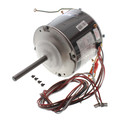
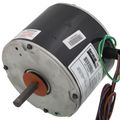
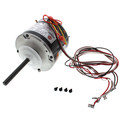
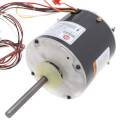
Condenser Fan Motors


 --%3E %3Csvg version='1.1' id='Half' xmlns='http://www.w3.org/2000/svg' xmlns:xlink='http://www.w3.org/1999/xlink' x='0px' y='0px' viewBox='0 0 100 100' enable-background='new 0 0 100 100' xml:space='preserve'%3E %3Cg%3E %3Cpath fill='%23F15C02' d='M30.05,70.23l3.79-12.01L8.8,39.6l30.73-0.17c0,0,6.98-19.61,10-28.93c0.54,1.36,9.88,29.1,9.88,29.1h1.58 L93.71,7.18c-3.58-3.82-8.66-6.23-14.28-6.23H20.56C9.78,0.95,0.95,9.78,0.95,20.56v58.87c0,5.41,2.22,10.32,5.79,13.88 L30.05,70.23z'/%3E %3C/g%3E %3Cpath fill='%23FBC8B4' d='M93.71,7.18L60.98,39.6H91.2L65.38,58.24l9.38,29.58L49.69,69.78L24.5,87.82l5.55-17.59L6.75,93.32 c3.55,3.54,8.44,5.73,13.82,5.73h58.87c10.79,0,19.61-8.83,19.61-19.61V20.56C99.05,15.4,97.01,10.69,93.71,7.18z'/%3E %3C/svg%3E)
 --%3E %3Csvg version='1.1' id='No-RB' xmlns='http://www.w3.org/2000/svg' xmlns:xlink='http://www.w3.org/1999/xlink' x='0px' y='0px' viewBox='0 0 100 100' enable-background='new 0 0 100 100' xml:space='preserve'%3E %3Cpath fill='%23CECECE' d='M79.44,0.95H20.56C9.78,0.95,0.95,9.78,0.95,20.56v58.87c0,10.79,8.82,19.61,19.61,19.61h58.87 c10.79,0,19.61-8.83,19.61-19.61V20.56C99.05,9.78,90.22,0.95,79.44,0.95z M65.38,58.24l9.38,29.58L49.69,69.78L24.5,87.82 l9.34-29.6L8.8,39.6l30.73-0.17c0,0,6.98-19.61,10-28.93c0.54,1.36,9.88,29.1,9.88,29.1H91.2L65.38,58.24z'/%3E %3C/svg%3E)
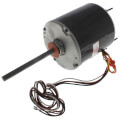
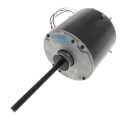
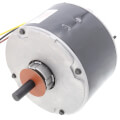
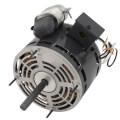
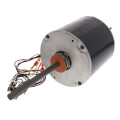
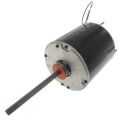
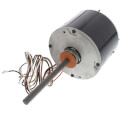
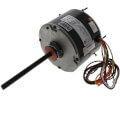
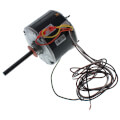
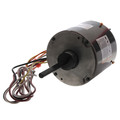
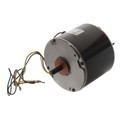
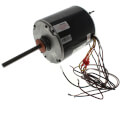
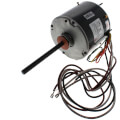
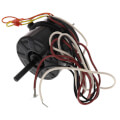
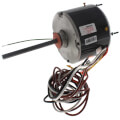
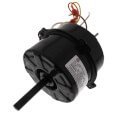
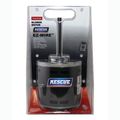
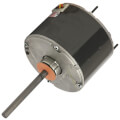
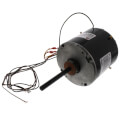
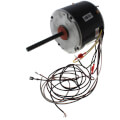
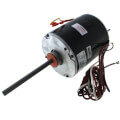
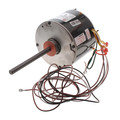
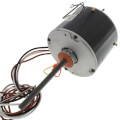

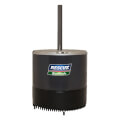
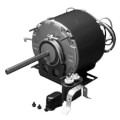
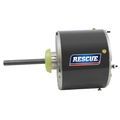
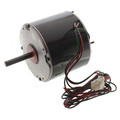
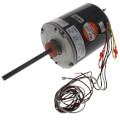
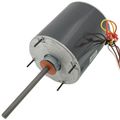
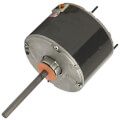
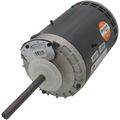
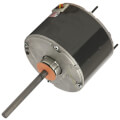
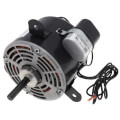
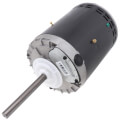
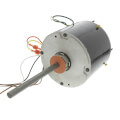
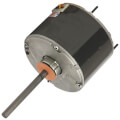

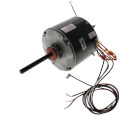
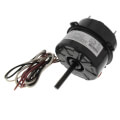
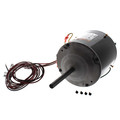
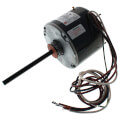
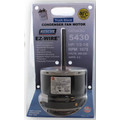
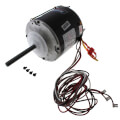
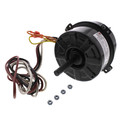
Condenser fan motors drive the fan blade that pulls outdoor air across a condensing unit's coil, rejecting the heat an air conditioner or heat pump collects from indoors. When this motor slows down, seizes, or fails outright, the condenser coil can't shed heat effectively, which drives up head pressure and can trip a system into a high-pressure lockout or damage the compressor if left unaddressed. Most replacement motors are specified by horsepower, rotational speed, voltage, and shaft diameter and length, since a motor that's close but not matched on these points can run the fan at the wrong speed or vibrate loose over time. Motors are available as direct manufacturer-specific replacements or as universal models that a technician can configure on-site, which matters on service calls where the exact OEM part isn't on the truck.
Subcategories
- OEM-Specific Motors: OEM-specific motors are built to match a single manufacturer's condensing unit exactly, down to shaft length, mounting bracket pattern, and wire lead configuration. These are typically the first choice when the original part number is known and in stock, since installation is a straightforward swap with no field adjustment needed. They tend to run at the precise speed the unit was engineered around, which keeps airflow and head pressure within the original design tolerances. Lead times can run longer than universal options during high-demand summer months.
- Universal Replacement Motors: Universal replacement motors ship with multiple mounting configurations, trimmable shafts, and multi-speed wiring so one part can cover a wide range of condensing units. Technicians configure the motor on-site by selecting the correct speed tap and cutting the shaft to length, which makes these a practical option when a truck can't stock every OEM variant. Getting the speed and rotation direction correct during setup matters, since a motor running at the wrong tap changes both airflow volume and amp draw. These motors are a common go-to for older or discontinued equipment where the factory part is no longer produced.
- Motor Mounting Hardware and Capacitors: Motor mounting hardware and capacitors round out a typical condenser fan motor replacement, since the run capacitor and mounting bracket often need attention at the same time as the motor itself. A motor replacement performed without checking capacitor microfarad rating and voltage can leave a marginal capacitor in place, shortening the life of the new motor. Mounting brackets and blade hubs need to match the motor's shaft diameter and the fan blade's bore size to avoid vibration or blade wobble. Keeping these parts on hand alongside common motor sizes reduces the chance of a second trip for a mismatched accessory.
Buying Guide
Selecting a condenser fan motor starts with pulling the specifications directly off the failed motor's nameplate rather than guessing based on the unit's tonnage. Horsepower, voltage, full-load amps, and rotational speed all need to line up, since even a motor with the right horsepower but wrong speed can move the wrong volume of air across the coil. Shaft diameter and length also need to match closely enough that the existing fan blade seats properly without rubbing the fan guard or shroud.
Rotation direction is a detail that's easy to overlook but critical to get right. Condenser fan motors are built for either clockwise or counterclockwise rotation as viewed from the shaft end, and installing a motor spinning the wrong direction reverses airflow across the coil, which can look like a wiring problem when it's actually a rotation mismatch. Universal motors typically allow rotation to be set during installation, while OEM-specific motors come fixed to match the original unit.
Condenser fan motors also pair closely with their run capacitor, so replacing a motor is a good opportunity to test the existing capacitor's microfarad rating against its stamped value. A capacitor that's drifted out of tolerance puts extra strain on a brand-new motor and can shorten its service life significantly. Confirming voltage, speed, shaft size, and rotation together before final installation avoids the callback that comes from installing a motor that's close on paper but wrong on one of these details.
Frequently Asked Questions
How do I know if a condenser fan motor has failed versus a capacitor?
A motor that hums but doesn't spin, especially if it starts turning when nudged by hand, usually points to a weak or failed run capacitor rather than the motor itself. A motor that's seized, makes grinding noises, or trips its overload repeatedly even with a good capacitor installed is more likely a motor failure. Testing the capacitor's microfarad rating against its stamped value is the fastest way to rule it out before condemning the motor.
Can a universal motor replace any OEM condenser fan motor?
A universal motor can replace most OEM motors as long as the horsepower, voltage, speed range, and shaft dimensions fall within its configurable range, but it needs to be set up correctly on-site for rotation and speed tap. Some tightly designed condensing units with limited clearance may not accept a universal motor's housing size. Checking physical clearance and electrical specs before the call helps avoid a wasted trip.
What happens if a condenser fan motor is undersized for the unit?
An undersized motor won't move enough air across the condenser coil, which raises head pressure and can shorten compressor life or trigger high-pressure safety shutdowns. It may also run hotter than intended and fail prematurely from the added electrical load. Matching horsepower and speed to the original motor's rating avoids this problem entirely.
Why does rotation direction matter on a condenser fan motor?
The fan blade is pitched to move air in one direction only, so a motor spinning the wrong way pulls air through the coil backward instead of pushing it out through the top of the unit. This cuts heat rejection dramatically and can mimic the symptoms of a low refrigerant charge or a dirty coil. Universal motors typically let the rotation be set during installation, so confirming it matches the original before finishing the job prevents a callback.
Should the run capacitor always be replaced along with the motor?
It's not strictly required if the existing capacitor tests within its rated tolerance, but many technicians replace it anyway since it's a low-cost part that's often near the end of its service life by the time the motor fails. Leaving a marginal capacitor in place can shorten the lifespan of a brand-new motor. Testing it before deciding is a quick step that avoids a preventable repeat failure.
